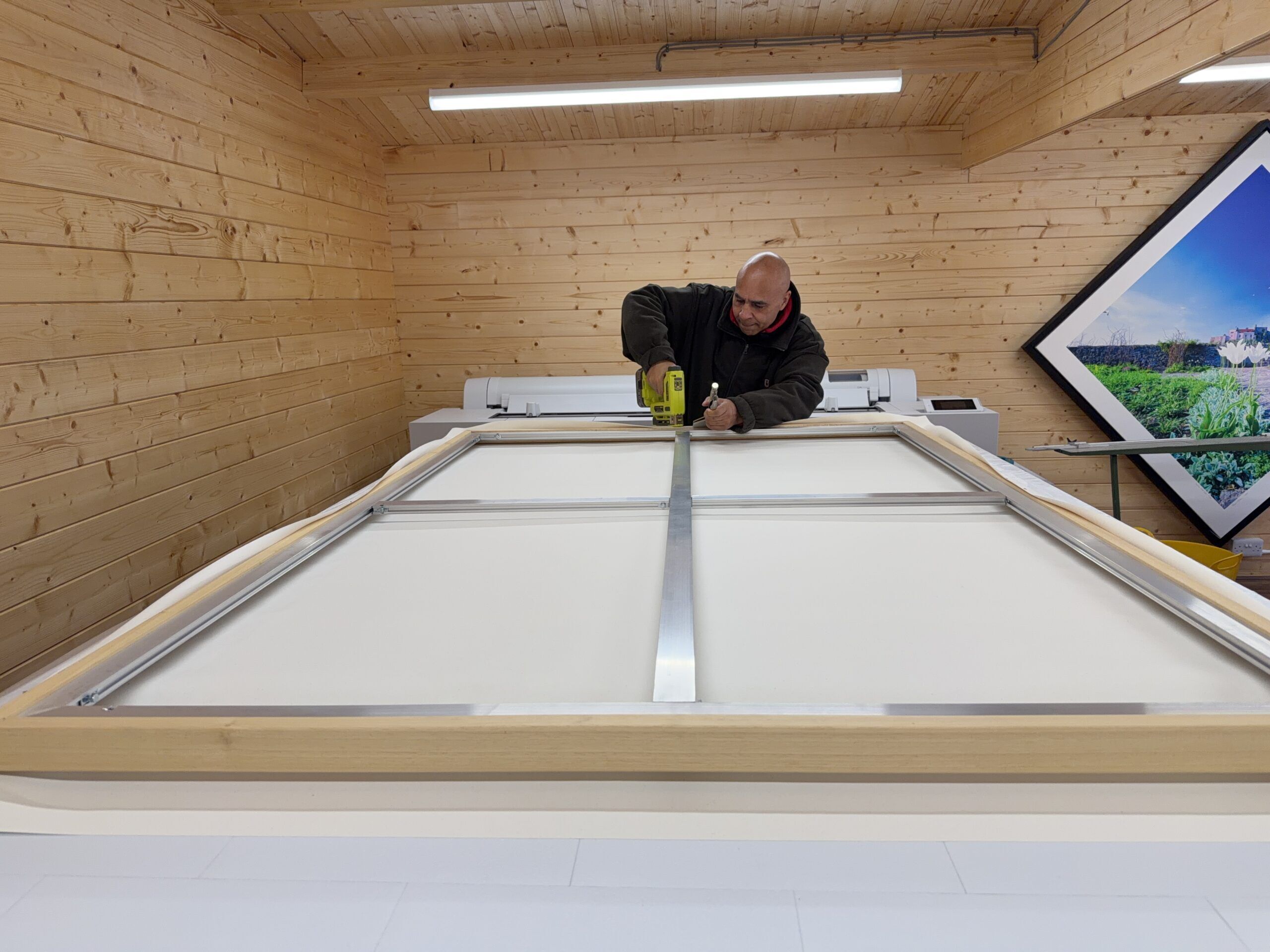
Given my preference for canvas, the stretching of it is naturally something I do a lot, and have done for many years – including framing…
The advantages of canvas are :-
- It doesn’t need glazing – this can be a massive cost-saving, and less worry (glass is so tricky!)
- Framing is not necessary (subjective), but if it is framed, the framing is usually cheaper than paper-based media.
- Is lighter and easier to handle and transport than conventional glazed paper printed artwork.
- Unstretched canvas can be shipped relatively very cheaply in postal tubes
- Canvas, especially varnished canvas, is quite tough, and can be repaired
The disadvantages of paper prints is that :-
- Invariably paper-based prints have to be framed
- Framing is expensive – especial archival or museum-grade framing
- Frames are relative heavier than canvases
- The fames need glazing – which add to the cost
- More vulnerable than canvas – especially glass
- Glass can tint and obscure the print – especially by reflections
- Framed prints are more expensive to post – and a susceptible to breackage in transit
Museum Grade optional extras
- Aluminium stretchers are preferred because they are very rigid, stable, and won’t warp. Wooden stretchers are prone to warping
- Aluminium barrier tape is applied to wooden part of aluminium stretcher (necessary for stapling) so the canvas doesn’t come into contact with wood (which is acidic).
- Archival corrugated backing board is screwed to the back of a stretched canvas to keep out dust, dirt, and insects, and adds rigidity to the frame (note: if the size of a stretcher is bigger than the corrugated board, two or more boards will be archivally double-bonded together – which in no way weakens the structure).
- Archival tape over the staples on the back of a large stretched canvas


