Category: Art Philosophy

  • Artist Anxiety

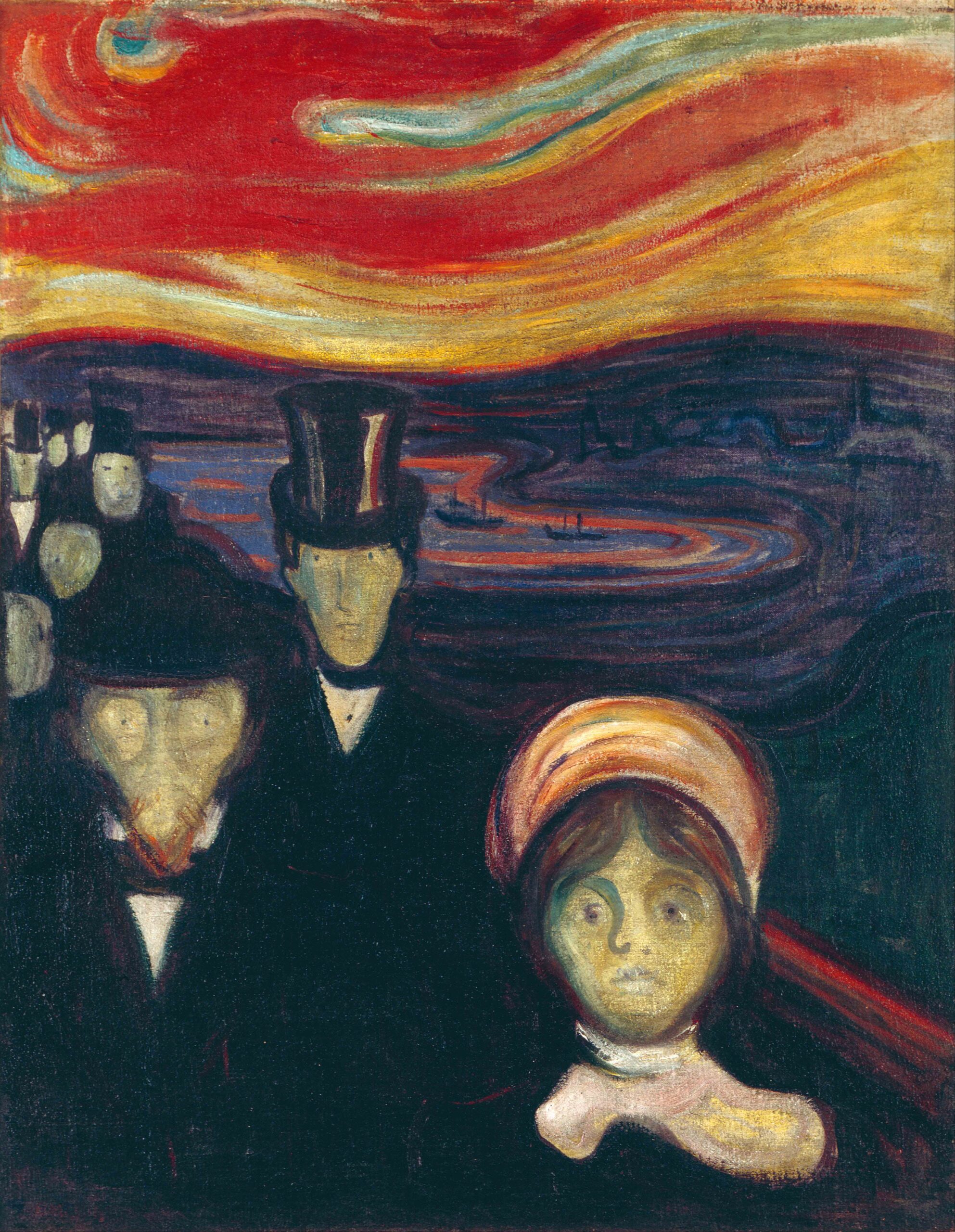
    Artist Anxiety

    There are many different types of artist and many types of journeys in creating a work of art. Much art in the last century is what I call utter rubbish – slipshod, slapdash – made within minutes to a few hours or a day or two. And it shows. For example Pollock’s drip “paintings”, or Hirst’s “spin” “paintings”. Most of it is utter contemptible rubbish in my humble opinion. Even many of the Impressionist’s work was done in a day – often outside with a portable easel and done in a single sitting (however, purely aesthetically, I do like a lot of work from that period from that art movement).

    I’m certainly not saying that the more time and effort spent on an art work the better it will be – and vice se versa. I’m saying that the more effort an artist puts into their work the more I will respect it and the more I will try to understand and appreciate it – and the better quality it is likely to be. This seems obvious to me…?

    Consider a book of a handful of words compared to one of 100,000 words… The latter usually is expressing much more than the former. But a 100,000-word book is not necessarily saying more that a 10,000-word book. The former could be very waffly and poorly structured. Whatever one is trying to express there is usually some minimum or ideal way of expressing it (for the target audience)… My general point is that something expressed very briefly or quickly is usually not expressing very much – compared to something where a lot more time and effort has gone into it…

    I’ve been working on a piece called “Golden Plover with Egg” (Jigsaw puzzle) for over ten weeks now, and I’m coming to the final stages – where things are finally starting to take shape – and, at last, I’m beginning to feel good about it. Often through the long arduous hours – many of which have been physically very demanding – I’ve been deeply anxious. Why am I doing this? Why is it taking so long? Am I wasting my time? Will anyone appreciate it?

    Not that I am doing it for money (more on this later), but will the work be worth anything? Will it have a value that is reflective of the effort I have put into it ? I’ve worked in I.T. for many years where I was paid quite a high hourly rate. What I would earn in three months (because I have about another two weeks work to go on my current piece) was a not inconsiderable sum. What might my hourly rate be for this piece…? (Not that I will sell it, but I will hopefully sell other editions of it…)

    The peculiar thing about art is that some art created in a slapdash fashion sells for thousands, if not tens – or even hundreds – of thousands, of pounds (£) – making the hourly rate absolutely ridiculous. Picasso made about 46,000 works of art in his lifetime – many of which were created well within a day. So his hourly rate was in excess of £100,000!

    Some art takes hundreds of hours – and sells for a pittance – making the paid hourly rate utterly pitiful – and puts a contemptible value on the artist’s time/life. Clearly there is no relationship between an art work’s value and the amount of time and effort that went into making it. Yet, for most other goods in society, the more time taken to make them the more expensive they are. It’s a very strange world we live in…?

    Why do I do art – I keep asking myself?! I don’t have to. Unlike some artists, there are plenty of other things I could do – and have done – for a living. The simple answer is: I don’t really know! I just know that I like making things and commenting on things that interest me.

    Yesterday, while working on “Golden Plover with Egg”, I was thinking why I do art – and this piece in particular? It’s so much work, effort, and cost (the raw materials and special tools are expensive)?! Mahler’s beautiful Symphony No. 4 was playing in the background, and I thought of the effort he must have put into composing that sublime masterpiece – the trials and revisions that it must have gone through. I wonder what emotions and motivation drove him to do it, the frustrations he experienced, the ups and downs he went through, the anxiety he felt of what others might think of it…? He was a fellow artist, so I thought I must share some of his emotions and anxieties…?

    Malher didn’t have to compose that symphony. No one asked him to do it (as far as I know). Possibly something inspired him, but, like many great works or inventions, inspiration is one thing, implementing it is quite another… Something in his deep psyche drove him to do it. No one told him how long it must take. He just set about doing it, and didn’t stop until he was satisfied with it. And all through the journey he will have applied his skills as a musician, and his heart and sense of aesthetics to evaluate and refine it. He would have been striving for a level of quality acceptable to him – and only him.

    There are no rights and wrongs with art – so there are no objective ways to judge it, or to know if the objective has been achieved. Well that’s not strictly true. In each form of art there are usually a few ground rules. Like music for Mahler, I guess he ruled out discordances, wanted to use (or felt he should use) certain instruments, and he possibly wanted four movements – because that was the standard Western classic symphonic tradition he was raised in?

    He had to figure out how to make the sounds he wanted – or at least make sure it was practically possible – i.e. playable and audible. So finding a practical solution to each and every note, phrase, passage – were upmost in his mind. He possibly followed other music rules that we don’t know about (because he didn’t write them down), and those I’m not competent to know or understand.

    However, the vast majority of the huge number of decisions that go into the artistic creative process are entirely subjective. Do I like everything? Do all the pieces “go” together? Do they “gel” together and create some form of harmony? If not, what can I change so that they do? Is it good enough? How can I improve it? What am I trying to say or communicate with this? Is what I want to communicate interesting and/or important? Have I achieved my goal/s? Is it finished? (I certainly don’t believe all, or even most, artists think like this – but the best ones do…)

    I think Edison’s phrase: “Genius is 1% inspiration and 99% perspiration” is a gross understatement. I think it’s much more like 0.0001% inspiration – or even less – and the rest perspiration!

    Back to my thoughts yesterday and Mahler’s Symphony No 4. While listening to all four movements, I thought how each was utterly sublime, perfect, and complete on their own – yet Mahler created a unified whole with them all. A staggering and wonderful achievement that enhances and enriches anyone who listens to it. It occurred to me that possibly only artists fully appreciate other artists – because they will have some insight into, or empathy for, the effort and emotion that has gone into the creative process…

    I don’t know what drives artists to create unnecessary, uncalled for, unusable, works of art, but listening to Mahler’s Symphony No 4 I thought: “thank god they do”…

    I think back to my last piece – “Guillemot with Egg” (http://michaelautumn.wordpress.com/2020/03/01/guillemot-with-egg-jigsaw-puzzle/) – which took a similar amount of time and effort as my current piece – and I forget all the effort, trials and tribulations that went into designing and making it. It may seem strange, but I love to look it, and I’m just so glad I did it! It’s such a huge sense of achievement – of fulfilling something that was such a tall order. If it was easy many people would do it – and it wouldn’t be such a sense of achievement…?

    It’s very nice that other people seem to like it, but that’s not why I did it. And they will have no idea of the amount of work, sacrifice, and emotion that went into it. But hopefully it communicates something to them – about the ideas I was trying to express – that no other form of expression could achieve…

    But why, oh why…? And does anybody apart from me really care…?

  • Survival of the Most Beautiful Art

    Another eery coincidence has occurred in my life. It was only yesterday, while listening to BBC Radio3 (something I listen to a lot because it is not very invasive and it allows me to concentrate on my work; and, not least, because they often play beautiful music!), and really enjoying the sheer brilliance of Felix Mendelssohn (1809–1847), Pyotr Tchaikovsky (1840–1893), and Ludwig van Beethoven (1770–1827) – that I asked myself: has any music of this standard been produced since? Was the 19th Century the pinnacle of music? Have composers just run out of ideas or lost their direction?

    The coincidence was that today I was listening to a BBC Radio 3 programme called Darwin And Music – where Petroc Trelawny was in discussion with Gary Tomlinson, Professor of Humanities at the University of Pennsylvania, Ian Cross, reader in music and science at Cambridge University and Roderick Swanston of Imperial College. They were discussing the idea that music had peaked with Beethoven – or at least with 19th Century music. They mentioned musicologist Paul Henry Lang (arguably the leading musicologist of the Twentieth Century who produced a seminal work: “Music in Western Civilization” 1941), who lamented the demise of modern music – saying that none of his contemporaries – Arnold Schoenberg (1874-1951), Igor Stravinsky (1882–1971), etc. were as good as previous composers…

    But I think there is another evolutionary force in human activities: basically this is not so much survival of the fittest but survival of the most beautiful. That is quality or beauty will survive the longest – the implication being that less beautiful works or works that do not come up to a certain standard will not have the same success at the box office or record sales, and general demand for them will be low. Given the choice between atonal music and 19th Century Romanticism, the latter will win hands down into perpetuity. The less beautiful, or even the non-beautiful (to put it politely) will fall into obscurity – where it belongs.

    I think there comes a point when the standard reached by predecessors is so great and requires so much effort and imagination – that would-be successors are in awe, but not awe-inspired. They are simply humbled into defeatism: a feeling that there is no way they can achieve the same quality. Some people’s reaction to this is to try to produce something different: I cannot compete on the same terms so I will try something completely different…

    Evolution, as I understand it, is not a gradual and constant “improvement” – somehow defined – but a continuous adaptation to changes. But that is not to imply intention. Evolution is blind. What it boils do to is that if there are changes to the environment (which are always happening due to catastrophic and/or gradual geological phenomena) then those changes may adversely affect the survival of certain species in certain locations with certain physical and psychological attributes. For example, if huge parts of Africa were to turn to a desert the animals have certain choices: if possible move to locations where they are adapted to survive, or nature will whittle out those unadapted – who cannot find food, a mate, shelter.

    Random genetic mutations take place all the time in the history of species. However, if, during the aforementioned environmental transition, genetic mutations happen to favour certain individuals – like longer necks, smaller size, longer tongues, or a greater sense of smell of hidden water – then there may be a negative filtering process where the species’ design tends to head in a particular direction. Such biological adaption, however, is not necessarily continuous or beneficial to future generations. An ever-growing neck is only useful as long as the trees are tall. And if the trees disappear and there is only close grazing to be had, then the long neck could be a positive disadvantage…

    However, I do think there are some unequivocally good, or universally useful adaptions, and their omnipresence is possibly testimony to this idea. I am of course thinking about the senses of sight, hearing, taste, and touch. Necks can grow and shrink, legs can come and go, wingspan can grow and shrink, size can grow and shrink – as prevalent environmental conditions “dictate”. However, I can imagine no situations where being able to detect one’s environment – to help locate food and mates, avoid potential predators, avoid physical dangers – like not walking off a cliff – I can think of no situations where these senses could be a hindrance. So while many species of animal differ quite considerably, the one thing the vast majority seem to share is the aforementioned senses…

    I feel human evolution, where the arts are concerned, is not “natural” in the normal evolutionary sense of the word. Human evolution in the arts is very much pre-meditated and deliberate. But is it? Surely evolution is not about what individual species do in order to try to survive. It is about what history has shown to be successful, and by implication unsuccessful, adaptations – regardless of how those adaptions came about. Some species, like the Horseshoe Crab (Limulus polyphemus), have lived on this planet for hundreds of millions of years with little or no change (hence they are sometimes known as “living fossils”), and they are contemporaries of very new species – like humans – who have only be around for about 5 million years. The human species isn’t necessarily the zenith of evolution on the planet: evolution is neutral with regards newness of species (many new species have come and gone in the course of the Eath’s history), or, if anything, it smiles on the longest surviving and most planet-friendly…

    In a similar vein, albeit on a much smaller scale(!), some art and classical music has been around for centuries and there is contemporary art and classical music. Contemporary, from an evolutionary perspective, confers no privilege or status – just chronology. If, and only if, two hundred years from now future generations wish to see or listen to today’s contemporary art – as much as we do today for the Impressionists, the Pre-Raphaelites, the 19th Century Romanticists, the Three B’s, Mozart – only then will be we able to say that today’s contemporary art is as “good” as art of yester-year… I bet my life that this will not happen as a general preference.

    Perhaps using the term classical music is defeating in this context – because I am effectively restricting how music might evolve. Perhaps the evolutionary direction music in general has taken is to generally favour the smaller more agile species. Let me explain. Conventional classical music is the blue whale or mammoth in evolutionary terms, requiring months of a composer’s imagination and effort, big orchestras, and are generally big, expensive, projects and a slow creative process. To compete with the great works of the past in the same genre is fantastically difficult. Perhaps music has adapted to smaller more agile units with small groups of individuals and single people, and improvisation. Maybe (classical) music has evolved, or is evolving into pop and jazz music and their numerous incarnations and derivatives. This could be as a result of the dissatisfaction of what conventional classical composers were producing. Maybe not. Maybe a new source of food in the form of radio, records, and television brought opportunities that enabled the smaller musical creatives to survive. Let me be absolutely clear: I am not saying the quality of these latter genres is no good –  nothing of the sort – some of it is in my opinion every bit as good and I think will stand the test of time. The problem for contemporary music posterity is that there is so much of it…

    Maybe the equivalent paradigm shift in visual art has been in graphic art, photography, digital art, animation and film. Maybe the old purposes for, or uses of, art have changed – leaving a lot of artists unsure as to what to produce. Many artists in the past had a “brief”. Today’s briefs are more often for things like adverts, product shots, graphic representations, etc. A lot of art today is completely uncommissioned and with a client’s brief. Maye artists are a bit lost?

    So the old notions of art may have changed – scale, medium, patronage, client-artist relationship, etc. But the standards by which they should be judged – and whether they will pass the test of time – are the same. It is not enough just to change medium.

    If evolution has any long-term direction I would say it is favours archetypes like progressively improving senses, mobility, adaptability, efficiency of converting food to energy, and … beauty.

  • Gallery #1 didn’t have the decency to reply…

    The gallery (which I shall refer to as Gallery #1 because there will be others) didn’t get back to me within a week so I decided to give them a call. I asked to speak to the owner (whom I named – I didn’t just say "may I speak with the owner" – the typical cold-calling approach!) but was told he was not in. I then started having a chat with the man who answered the phone. I said to him that I just wanted to make sure the owner had received my email – in this day-and-age of junk mail there was a good chance that he didn’t. The gentleman asked my name and said that the gallery receives maybe a dozen approaches from artists a day, that the owner generally checks all the mail, and if he hadn’t got back to me then the chances are he would not.

    The gentleman said that the gallery doesn’t have enough time in their calendar or space in their gallery to show all the work of their existing artists – let alone taking on new ones. He apologised and said that that was just the reality of the situation. I thanked him and that was the end of the conversation.

    I just feel that with a gallery owner making his living from hard-working artists – that at least he would have the decency to reply to a prospective artist who has approached him for representation. Suppose the situation was reversed: I was a famous artist, he was setting up a new gallery aiming for the big time, and he approached me… Did he ever stop to think how he might feel if I completely ignored him?

    He may live to regret it – who knows? The search goes on…

  • My First Approach to a Top Commercial Art Gallery

    Today I made my first approach to a top commercial art gallery to see if they are interested in representing me. This must be something akin to an author approaching a book publisher to try to get their work published. I am sure that, like novels, some will like your work and some will not…

    I selected them very carefully on the basis that they deal with famous contemporary artists – including those working in photographic and digital mediums, and I know of them indirectly through a buyer of one of my works.

    It will be interesting to see if they consider my work on merit or whether they are more interested in the CV – i.e. something which tells them you are good – or not – as the case may be…

    This endeavour has been slightly delayed due to the RA Summer Exhibition – where one of my three pieces was damaged and the insurance claim has taken some time to be settled. It has meant that some of my work has been sitting in their vaults awaiting collection. I did not want to arrange for more than one collection – preferring to await the outcome of the insurance claim. The RA has been very good in dealing with the damaged picture, has resolved it amicably, and they have returned all my work at their own expense.

    I am still struggling with the catch22 situation I am in – of trying to get financial security to do more art. I have to support my family and home, and somehow I have to break out of non-art work. Family life is precious, and there can be no better creation than children. However, they do sap art time…

  • Art speak for itself should

    Art speak for itself should
    If it is any good
    It matters not a jot
    Who did what
    Where they studied
    Whether they studied
    Like music a chord strikes
    In your soul or dislikes
    Art in your mind’s eye
    Doth please or defy
    No scholar or seller is able
    To umrumble your taste’s stable
    As no amount of psyching
    Can change your marmite liking…

  • Hirst art heist

    According to an article in the Sunday Times (17th June 2007 by Maurice Chittenden), Sir Trevor Nunn bought a painting he thought was a genuine Damien Hirst for £27,000. The “painting” was called “Squirly Hoops Touch My Nuts Peace and Love” and was in fact a “spin painting” done by Hirst’s two-year-old son, Connor, and Keith Allen’s son Alfie, aged 10. Nunn subsequently sold the “painting” for £45,000.

    This begs a number of questions. Why did Nunn buy it in the first place? Did he buy it because he liked it? In which case why did he sell it? Did he like it initially and then go off it? Or did he buy it as an investment? If the latter, what does this say about the art market…? Is art no more than stocks and shares – with no intrinsic value – just bought and sold in the hope of making a profit?

    Another question: in what sense was it a Hirst painting? What gave him (or his agent) the right to put his name to it? Why was the painting not sold as having being done by Hirst’s and Allen’s sons? And if it was, would it have fetched the same price…?

    It seems that it does not matter what the work is like or who actually did it – only that it is thought be have been done by a famous artist, or somehow orchestrated by them.
    I think we have to draw a line about who did a piece of art and therefore whose name should go on it. Suppose we were not talking about a piece of “art”, but consider instead that this were a piece of music. Let us consider a recording of some random piano “playing” by Mozart’s two-year-old son. The question is not would it be worth anything – because there are people who would probably be interested in anything to do with the great man (a truly great man). The more interesting question is: could the piano “sounds” be passed off as a work music produced by Mozart? ANother way of putting this question is: would the piano “sounds” have any musical merit? The answer in both cases is certainly not, because, firstly, Mozart simply would not put his name to anything he hadn’t finished and was not proud to proud to put his name to – his was a genius and had the highest standards. Secondly, in music there is probably unwritten but fairly universally accepted standards – and, quite simply, random sounds do not constitute music.

    For a piece of “art” to be indistinguishable from having been done by a “world famous artist” and what is in effect a couple of random young children – says a lot about the quality of the work being produced by the “artist” – i.e. utter rubbish, purely random and mechanical, and with no artistic merit at all. You certainly would not mistake the work of a two-year-old child for a completed work of Dali, Ingres, Hans Holbein, or Pieter Bruegel…

    In philosophy it is very hard to categorically know something for certain or to be sure you are right, however a very useful technique generally used is to appear to the reader’s general intellect and show that the opposite of your proposition is absurd – and therefore extremely unlikely to be false – reductio ad absurdum (Latin for reduction to the absurd).

    I wish to attack two commonly held beliefs in art today. The first is the claim that anything an artist claims is art – is art. The second is that anything an artist gets anyone else to make for them is art.

    Anything an artist claims is art – is art – was thought up by Duchamp in 1917 (Fountain).
    Anything an artist gets anyone else to make for them is art. This is a fairly common practice today and the most infamous exponents of it are Damien Hirst and Jeff Koons.

    Hirst’s spin painting with butterflies – where the butterflies are ethically sourced. I find this term very peculiar indeed. Killing butterflies, or any other living creature for that matter, is a tragedy. Period. Doing it just to make money should be met with a jail sentence. The only ethically sourced butterflies are those painted or photographed – where no butterfly is harmed or distressed. Hirst is thought to be the biggest importer of butterflies in Europe. The sooner he stops this cruel inhumane nonsense the better. I hope for his sake that reincarnation and karma…

    To be continued…

    ***

    Michael Autumn
    Cambridge, UK
    June 2007

  • I did not get into the RCA: is that a good or a bad thing?!

    After all the trouble the applicants go through to apply, to put a portfolio together, the logistics of sending their portfolio in and collecting it (mine was very big: I had to make a portfolio case because you can’t buy them as big as I needed, and I had to hire a van) – if we are unsuccessful, is it asking too much to be informed why?

    Was it that they felt they had no one in the department who knows enough about digital art, digital and analogue photography, and natural digital painting – the areas I am particularly interested in? Do they even recognize this as a valid art form? Do they appreciate the amount of effort and skill involved in this art form? Are they relatively new to computing, and is their perception of computing so naive thet they think anything done using computers is easy? Is it just too new for them and do they feel they couldn’t support me at a sufficiently advanced level?

    Of course it could have been that the selection panel’s consensus of opinion of my work was simply that it wasn’t good enough and showed no potential or promise. Or it could have been that with only forty-five places available, they simply considered that there were at least forty-five other applicants who were better or more deserving than me? I have no idea.

    One thing we were told at the Open Day was that they were looking for applicants who showed a certain “need” or incompleteness: students who weren’t entirely sure where they were going. As soon as I heard this I started to doubt my chances… I am not in the least unclear about the art I am creating. This selection policy is at odds with scientific and social science disciplines (and almost certainly the other arts) – where academic establishments select the best on merit – i.e. those with the most promise, the most talent, and the clearest vision. What is wrong with being clear?! Surely the best artists are clear about what they are trying to achieve?!

    Now that the whole process is over and I am no longer trying to get a place at the RCA, I can speak my mind freely. First of all I am not in the least bitter about the rejection – a bit disappointed yes, but not bitter. In fact it takes a huge weight off my mind – the pressure of how to finance it. I confess I was hoping to go there mainly for the kudos, and to have the time to explore new things. I certainly don’t feel I need direction, and if the selection panel think someone else would benefit more from studying there than me – that is their prerogative.

    However, it does answer a few questions that I had… I spoke to a number of students on the Open Day and not one of them seemed to know what they were doing – artistically. One second-year student was really quite stressed out by it, and I really felt for her. What do they expect if they select students who don’t know what they are striving for?!

    It wasn’t all bad: on the Open Day some of the graduate illustration and animation work we were shown (via the internet) was excellent – but then it would be if you pick the best of the last few years?

    The exhibition of work-in-progress was outstandingly bad. It is no exaggeration to say that the whole exhibition wouldn’t have looked out of place in a secondary, or even primary, school art display. There was no display of talent, care, or pride of work (with the exception of some of the textile work). My jaw dropped when I saw it. With utter disbelief I said to myself “Is this the best of the best…?”

    If this is what is taught in art colleges, if this is the standard that art students are molded into producing and praised for – then that answers the fundamental question I have with modern art: why is the vast majority of it so bad, shoddy, poor in work-person-ship and professionalism, and almost irreverent? Are the lecturers so embroiled with theory and the quest for originality – almost at any cost – that they have lost sight of what art is about? Art is not about pandering to novelty-seeking academics – who are so caught up in art history and theory that they long for new ideas to muse and pontificate about. Art is for society, it is a public discipline, and as such is judged by the majority – by the public. If it doesn’t communicate with the public in a positive way at some level then it has failed. Period.

    A word of advice to aspiring artists, and you can take it or leave it. Academics are not wealthy people. They will not buy your work, or if they do, you will not get much from them for it. Think about who your buyers might be, and consider them, not you tutors, when producing work… If you get a first class degree or some other qualification and nobody buys your work because it is so obscure and inaccessible…

    In closing, I would say about the buildings themselves, that they in no way lend themselves to art. They would be better used as offices or a prison: totally uninspiring and with very poor natural lighting. I don’t think I could have spent much time there…

    I am not sure why the RCA has the kudos it undoubtedly has. What does this say about “lesser” art colleges…?

  • Royal Academy of Art Summer Exhibition 2007 – here we go again!

    The Royal Academy’s Summer Exhibition is the largest, and possibly oldest, open contemporary art exhibition in the world. Although it is meant to be only for living artists (established or unknown), last year one of its’ dozen or so gallery rooms was devoted entirely to a recently deceased Royal Academician – a tad unfair, you might think, for all the struggling living artists out there. Royal Academicians are not graduate students of the college – as you might expect – they are a self-elected, self-governing, board: new members by invitation only…

    Without exception the Summer Exhibition has been held annually since the Royal Academy’s foundation in 1768. An essential part of the London art calendar, the show drew over 150,000 visitors in 2006 and over 1200 works were included (out of about 9000+ submissions). Following long Academy tradition, the exhibition is curated by an annually rotating committee – whose members are all practising artists.

    The majority of works are for sale (with a commission going to the RA) and there are a few private viewing days before the exhibition opens properly to the general public – where private members – including the rich and famous, and art collectors (not necessarily mutually exclusive groups) get the best pickings…

    There will be a BBC2 television programme about it that will be aired just before the opening (last year was the first time they did this in the Summer Exhibition’s entire history).

    There are numerous prizes for different genres and one for the overall best-in-show – the value of which is £25,000. This is more than the Turner Prize, but not as prestigious. It’s all down to PR, and the RA is not as good as the Tate at this. It would be much more interesting if the prizes were decided by public vote (alas they are decided by the Academicians), because I think art ultimately has to stand up to public scrutiny. Indeed, I think it is exactly because so much art is not voted on or directly selected by the public that we get such a skewed selection of art in galleries these days – in favour of the new and out-landish – rather than what is good – in some democratic aesthetic…

    Royal Academicians have the right to exhibit up to six pieces – they do not have to go through a selection process – so in effect there are only about 600 slots available for about 8000+ submissions – quite competitive. Non-Academicians can submit up to three pieces each at a cost of £18 each.

    This year entry forms have to be in by 23rd March, works have to be submitted by early April (glazed works have to be submitted on different days to non-glazed works – which can be annoying if you want to submit both – it means two trips; sculpture is a month later), and notifications of acceptance or rejection are sent out by 1st June. The Summer Exhibition itself this year is from 11th June until 19th August.

    At this stage of my career I consider it essential to try to exhibit at the RA. Last year was my first attempt and I was fortunate enough to have one of my three submissions selected (Depth Of Tulip Field). This was no mean feat because despite what they say – the Royal Academy is quite a conventional art institution. Radicalism comes from the new – not the old… It was no mean feat because my work was a digital art print – quite a new thing for the Academy. It was hung in a gallery room devoted to contemporary art, alongside work by Damien Hirst, Tracey Emin, Grayson Perry – to name a few of the best known contemporary contemporary artists. I could complain about the fact it was hung too high to see all the detail in it (a very important aspect of the work), and about the fact it was tucked behind the exit boarding where you couldn’t see it when you entered the room – but I’m thankful it got exhibited at all – so I won’t 🙂

    This year’s theme is “Light” (there is a loose theme every year. Last year it was “From Life”). I have three pieces that I will probably submit which are broadly on that theme: Pregnant Reflections, Lindisfarne Walled Garden, and Times Square (all are featured on this blog site). I doubt very much if I will have time to finish any new work between now and then (now I am back doing computer consultancy to help pay for the RCA course which I hope to get accepted on…).

    There is some tradition associated with the Summer Exhibition – as you can probably imagine of an old English institution (something we seem quite fond of) – not least of which is the Artist’s Hanging Day. All successful artists are invited to attend a day at the academy (the day before the official opening) – ostensibly to tend to their hung works and to make any last-minute adjustments. While this may have been a serious professional, competitive, artistic matter in years gone by – today is it really just a party and celebration for the artists.

    On Hanging Day morning last year – and I think the format is the same every year – we gathered in the forecourt of Burlington House (home of the Royal Academy of Art since 1867), amid the joyful, smiley, sounds of calypso steel-drums (the music is possibly not the same every year!). At about 11-15 a.m. a senior-looking priest (in age and probably importance also) – with a big cross in hand – and his entourage – headed out of the forecourt, through the archway, and then turned left down Piccadilly. There was no announcement of what to do, and I for one didn’t really know what was happening. However, I followed all the other (presumed) artists – following the priest and his entourage.

    Soon there was a long stream of us with television and still cameras tracking us, walking out of the forecourt, under the arch, and then left down the middle of Piccadilly – where the traffic had been blocked off – just for us! It was a great feeling to have that little special moment with the world looking on (probably wondering what the hell was going on, and as for the stopped drivers – I bet they had a few choice words…). All this was helped by the fact it was glorious sunny day!

    It was just a short jaunt along Piccadilly before we turned right and headed into Wren’s favourite church – St. James’. I had never been in there before (much to my surprise) and therein gathered a colourful collection of happy, proud, fellow artists. The Service for Artists that followed, was, as you might have guessed, about art and artists – aimed at artists. There was a particularly eloquent sermon – more like a learned lecture – from the leader of the procession (who was also an eminent professor), on the subject of the meaning of art and how its’ meaning has changed over history. There was singing, poetry, and prayers. At the risk of sounding un-cool, in all honesty it was a very enjoyable and quite a poignant service – especially in such a beautiful setting.

    Afterwards, Piccadilly restored to its normal hustle and bustle, we made our way back to Burlington House (along the pavement!), and then we headed for the gallery rooms. At the entrance we were handed an official exhibition catalogue and an artists’ pass. I anxiously thumbed through catalogue – which for me was the final proof that I had got in – looking for my name. I went to the artist index, and, low and behold: I saw my name! It was even spelt correctly! (I was a bit concerned to find it had my address on it – a bit worrying from security point of view.) I then looked up my work, and there it was: number 1013, Depth of Tulip Field. Wow!

    In the gallery we were free to explore the exhibition and indulge in free drinks and quite tasty nibbles – which were being continually offered to us by Eastern-European looking and sounding men and women (mostly). It was a buzzing atmosphere – literally we were like bees in a beehive – with the anxiety and nerves and curiosity of findings one’s work. I didn’t just want to go off and rush to find my work: I wanted to stroll around the exhibition and stumble on it. I wanted it to find me, as it were. I was happy to take in the atmosphere, watch the other artists, chat with a few of them, drink, nibble – take my time…

    Eventually, right at the very end of the exhibition, in a small room of no more than twenty works, rather disappointingly tucked behind the exit boarding and hung much too high – I found her. I looked at it from the few angles it could be seen and couldn’t suppress my disappointment. In just about all the other galleries the pictures were hung much lower – in fact as many works as possible were squeezed in (albeit tastefully). But not in this room: there was plenty of space beneath my piece, but someone in their wisdom decided it should be high up! I wandered around for quite a while trying to find an official to see if I could get the picture lowered. When I eventually found someone I was politely told that it was up to the hanging committee. As soon as I heard the word “committee” I knew I was wasting my time… In the room where my work was I was pleasantly surprised to discover I was in good company – Damien Hirst, Tracy Emin, Grayson Perry, and some Royal Academicians. It wasn’t all bad. I left with a mixture of elation and disappointment…

  • Should I study at the Royal College of Art (RCA)?

    The Royal College of Art (RCA) in London is one of the (if not the) pre-emminent schools of art in England, and probably the world. I am wracked by a comment made by Anita Zabludowicz (a well-know art collector and museum patron. No connection – I just happened to be sitting next to her) during a conversation we had on a flight to New York. I asked her something along the lines of: what, in her view, makes a good artist, or was it: how does an artist become well-known? She said that one of the most important considerations is where they studied. She followed this up by singling out the RCA…

    So there I was, back in 2002, flying out to New York on an artistic/photographic trip, sitting next to one of the most influential art collectors in the world, at a point in time I was feelng really good about my art and making it to the top, without any formal qualifications in art or photography – and feeling I didn’t need or want them. And then this bolt from the blue… Up until that point I rather naively thought (and still do to a certain extent) that “good” art stands on its own? You look at a picture, and possibly also read about it – the artist’s intentions and motivation for doing it – and you decide if it is a), likeable, and b), interesting? Simple? If Bacon and Van Gogh could succeed as self-taught artists, then why can’t I…?

    From a very early point in my artistic development – back when I was a teenager – I was producing art with meaning. Yes, I wanted/want to create beautiful, eye-catching, work – but I felt art was a means of expression also. After all, I could just take a photograph of something if all I was interested in was to reproduce what it looked like? From my early beginnings I had decided that it was important to write about my work because I think art works on two levels: the purely visual, superficial, instant reaction, dimension (the one most people respond to); and the knowledge, motivation, history, technique, technical, dimension.

    The latter dimension can be completely missed, and is completely missed, by the vast majority of people. However, there has always been a lot written about famous works of art. In a sense it has been (and still is) the fact that there has been a lot written about certain works of art that has been necessary, though not sufficient, to make them famous? Writing is the PR/marketing of art. The art itself, especially originals, have very limited historico-geo-demographic exposure, and without writings about them, most art would be unknown by the vast majority of us. Having looked at thousands of works of art and read extensively, and attended many lectures, about art – it was clear to me that without someone writing about this second dimension of works of art that that detail would be missed and lost. This information doesn’t jump out at you when you look at a work of art. Someone has to publish it…

    So. I feel my work is interesting and that it is likeable. I write about it, will take it to galleries, show it on-line, and it will sell and become famous. Right? Hmmmm…

    I have a real problem in that I have taught myself most of what I know and, very importantly, I know I can find out anything I want to know, and can learn anything I want to learn. I do this all the time. I am constantly learning new things – like most people, but possibly more than most people, because I am, and have been for as far back as I can remember, an avid learner and a perfectionist, and I have the drive and motivation to do it.

    For example, I am completely self-taught in computing: I know about ten different programming languages, several databases, many technologies, design concepts, protocols, methodologies, interfaces, etc. I have frequently worked with computer science graduates and post-graduates, and, modesty aside, I have designed and developed bigger and more complex systems than most. When I was at university I hadn’t heard of the term “computer science” and didn’t do any computer science courses. I did, however, feel it was interesting and important to do a lot of statistics and computer programming and so I taught myself. Little did I know at the time that some of the students I was helping in the computer room were studing computer science. Moreover, many of our lecturers were world famous and had published text books, but lectures were no more than going through a chapter of their books or journal articles! The exams were centred around demonstrating that you had read and understood the books and journal articles. One can read books and journals without going to university… Going to university, it seems to me, gives you a place and time to read the books and journals, but it certainly is not the only way you can read the books and journals.

    In academia it is considered that only after you have completed a Ph.D are you sufficiently learned and experienced to be able to carry out your own research – without supervision. This is probably true for the vast majority of people, but history is full of some of the most excellent contributers and inventors who did not follow any formal training. But the important point I am trying to make is that some people can reach a level of dedication, objectivity, hard work, motivation, and self-appraisal – that they can go on and achieve great things – with our without formal training. Not many people reach this level, but people are all different and some reach it earlier than others…

    In art there is no right or wrong. There is an expression: “those who can – do, those who can’t – teach”. Whilst this is a gross generalisation and unfair to many very good teachers, most people follow a career that is most secure and highly paid for their skill set and experience. For someone to study art and then teach it probably isn’t saying much for their ability to make it as an artist… But what can one learn at an art college? One has the opportunity to try different mediums and techniques, and one’s aptitude and skill is demonstable and largely objective. But a great deal of art today is not about skill as such, but about very subjective things – like theories and concepts – and what one examiner might like anther may dislike…

    For over twenty years I have been reading books about, and learning by practicing and doing, art and photography. I have bought the canvases, oils, pastels, water colours, pencils, inks, gouache, acrylics, all the major types of camera – 35mm, medium and large format (with tilt and shift), lenses (from fish eye to the longest telephoto), flash guns, studio lighting, the most powerful computers, natural art software, photo-editing software, pressure sensitive screens, very high quality scanners and printers, colour calibration devices and software – and I have spend many years mastering them. I am not at all sure what I could gain by going to art college (I thought the same back in my early twenties). I do art and photography all the time and learn and try anything new I want to. Digital art is moving at such a fast rate it is extremely unlikely that an art college could keep up with it. I, as a practicing artist and photographer on the other hand, can move in any direction and keep at the forefront of technology or technical opportunities.

    Part of me thinks that going to art college is unnecessary – it would just involve carrying on what I do now. So in that sense it will not do me any harm. However, I think I might find it restrictive and basic. It would also be a very big financial committment – both in terms of fees and loss of earnings (although I might be able to sell work and do some part-time consultancy). Part of me thinks I would just be pandering to the art market’s rules and mores…

    There is also the question of would I be accepted? Competition for places is very strong indeed and they naturally have conservative views about entry qualifications (it is exclusively a post-graduate college after all). I have no formal qualifications… However, for me, if I can’t go to the best place to study art, then I won’t bother. With my wealth of experience and knowing what I am about artistically, I’m not prepared to go to an undergraduate college and join teenagers looking for direction, amusement, and the bars…

    I think the best thing to do is to go along to their open day this Thursday (11th Jan 2007) and see what they have to offer, gauge if it is the sort of place I could feel comfortable and happy in, decide if I might learn anything there – and take it from there…

  • Gigapixel Art and Photography

    There seems to be at bit of a buzz going around at the moment about gigapixel photography. This is digital photography where the detail or resolution is so high that the number of pixels used to make up the image is in execss of a billion – one thousand megapixels. If such numbers don’t mean anything to you then it might help to say that such images occupy in excess of four CDs, or you might fit one of them on a standard DVD. The average digital camera is currently about five megapixels – so in excess of two hundred of such images would go to make a single gigapixel image.

    Printed out they look stunning, and they require special zooming technology for you to be able to see them on the web.

    I have being doing gigapixel art and photography since 2003, indeed some of my pictures run into several gigapixels in size. There is a big difference between gigapixel art and gigapixel photography though. Whereas you can get a camera to take a gigapixel image at the press of a button – or you can get stitching software to fit dozens or hundreds of smaller images together to form one larger composite

    (e.g. work in progress of photograph of shops)
    Shops
    (Click on image to zoom in…)

    – this bears no resemblance to the effort involved in gigapixel art. The work involved in creating, editing, and compositing dozens of photographs, all the freehand work on such large files, and the colour proofing – typically runs in to several hundred hours for me – using the most powerful computer equipment. And that is before doing anything creative with it…

    E.G. zoom in to the centre to see the flying doves? Times Square
    (Click on image to zoom in…)

    I hope this puts to bed the myth that digital art is quick and easy – or certainly gigapixel art definitely isn’t!

    Just for the record, gigapixel photography is nothing new really. In terms of film photography, large format cameras, like my 10″ x 8″ (this is the actual size of the usable part of the transparency or negative) Sinar P2, took/take the equivalent of gigapixel photographs all the time. Indeed I have a scanner that can scan up to 18″ x 13″ at 10000 dpi (dots per inch). A 10″ x 8″ transparency or negative scanned at this resolution equates to 100,000 x 80,000 pixels = 8,000,000,000 pixels of information. This is 8 thousand million pixels or 8 gigapixels… (For those of you who think in terms of bits and bytes, this is twenty-four (24) gigabytes at 8 bits per colour, or forty-eight (48) gigabytes at 16 bits per colour).

    As an artist I am thrilled and daunted at the same time about the prospect of being in control of well in excess of a thousand megapixels. However, the creative freedom this level of control gives is very liberating…

    You can see zoomable examples of my work either from links on this blog or on my web site, or at various exhibitions.