Category: Gallery Curating

  • Aberdeen Art Fair 2024

    Aberdeen Art Fair 2024

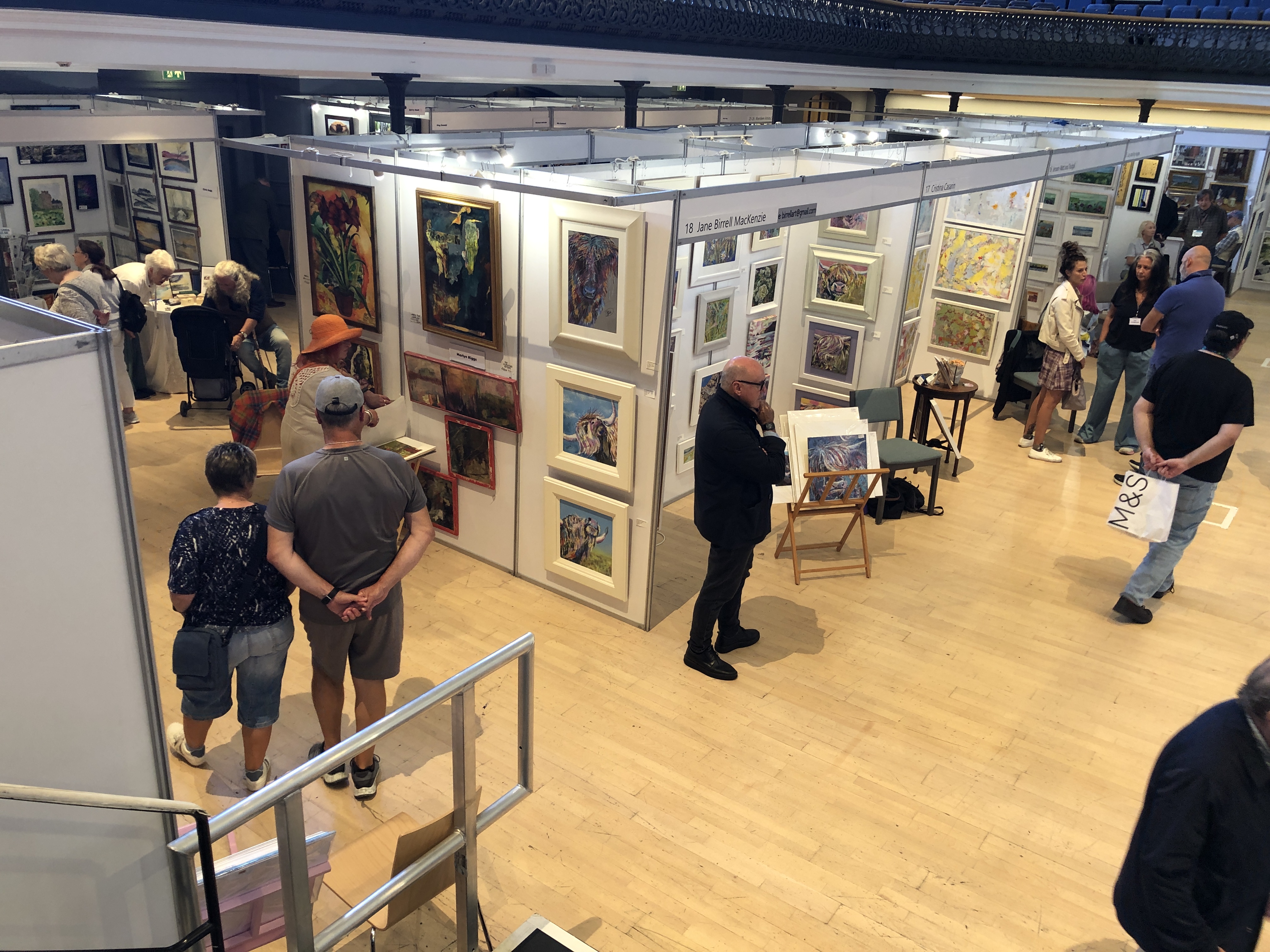
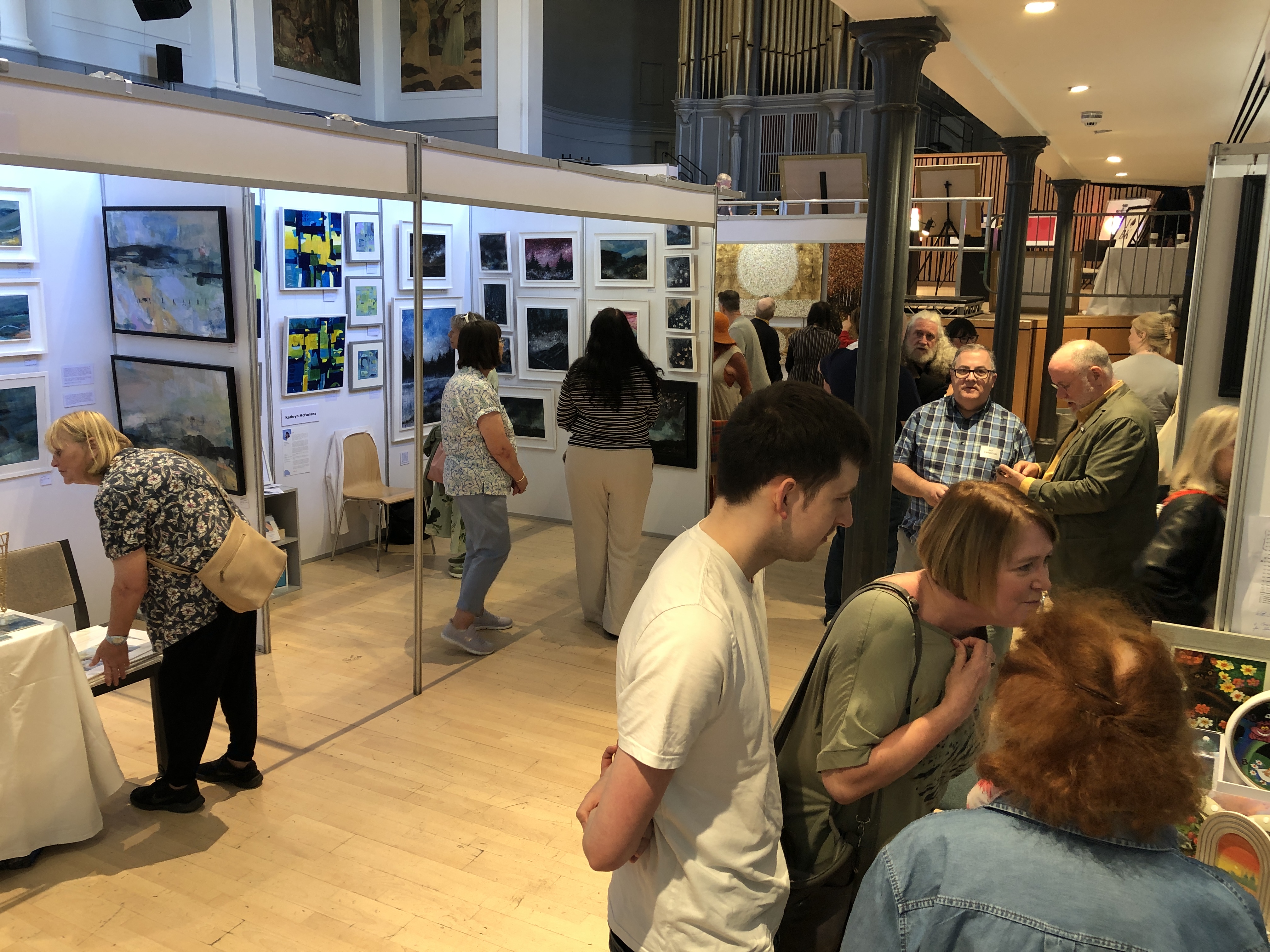
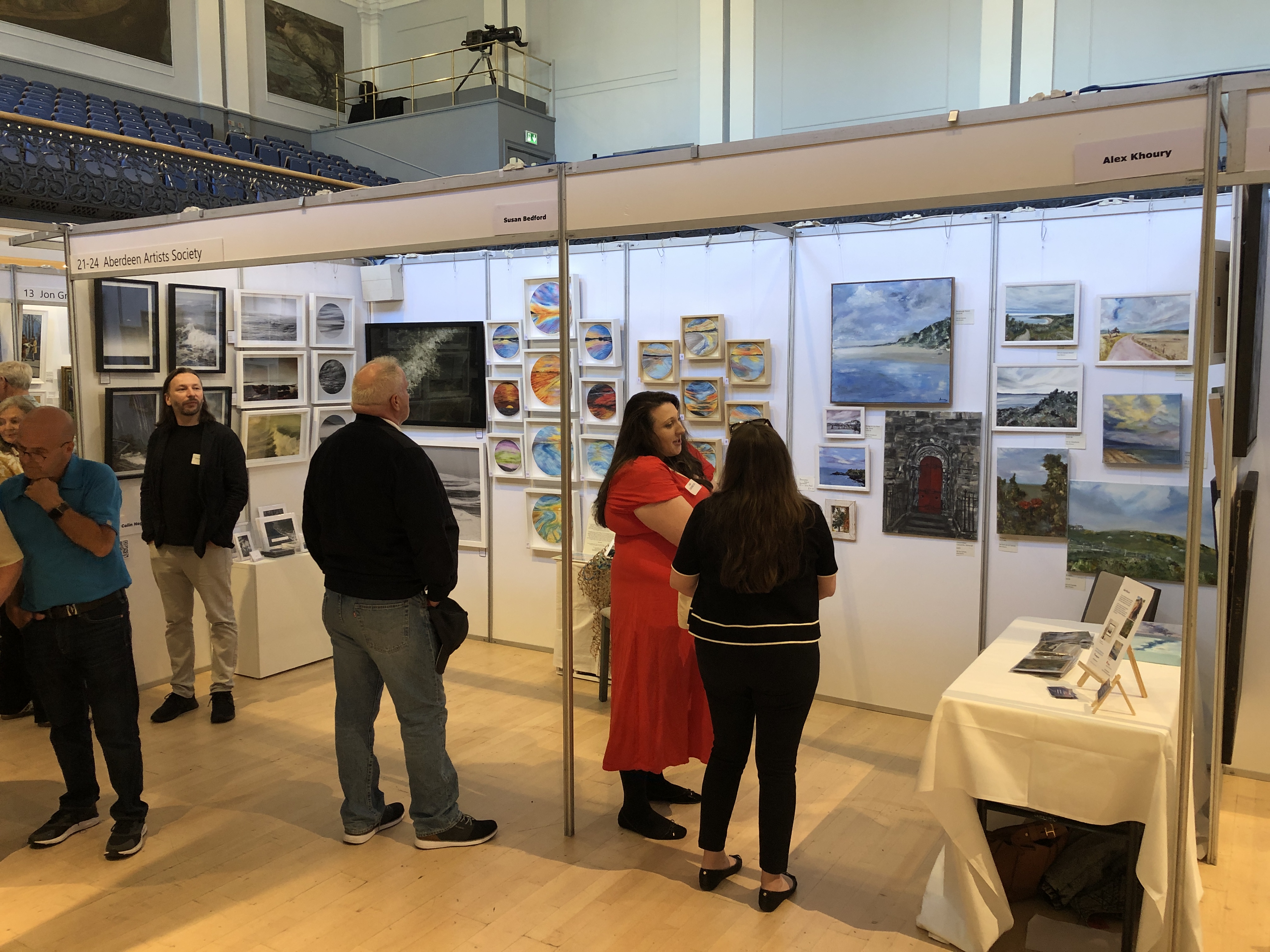
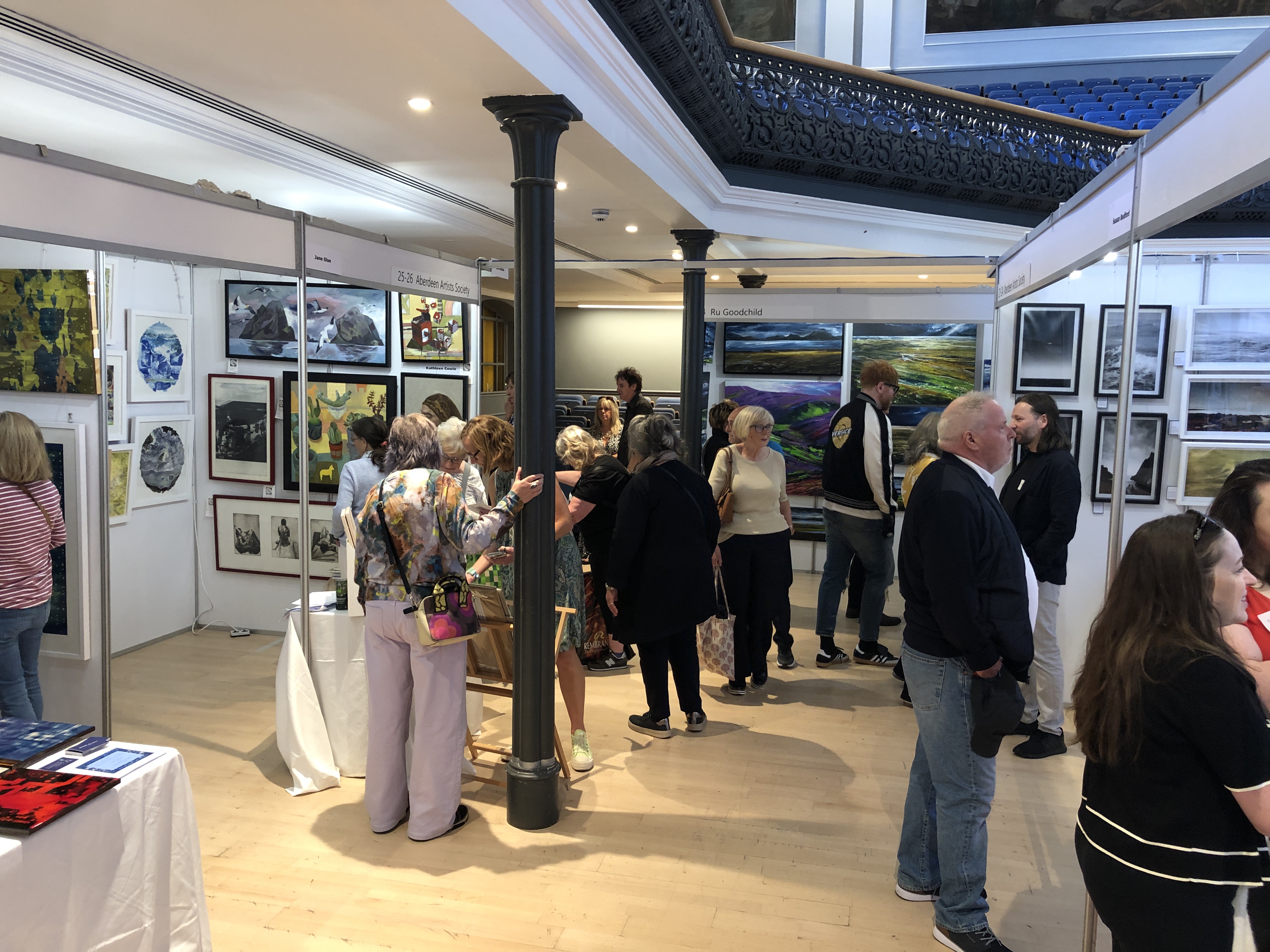
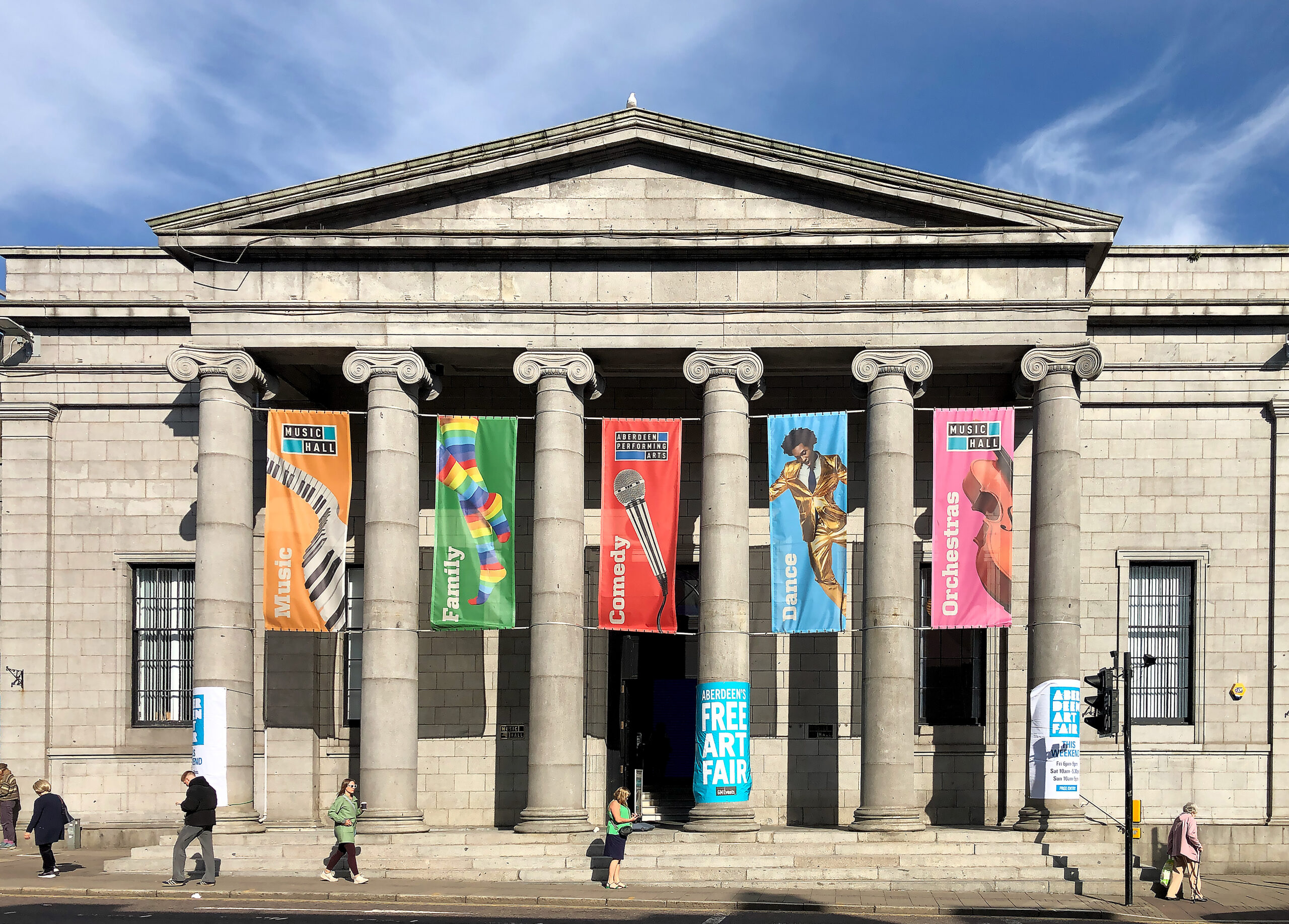
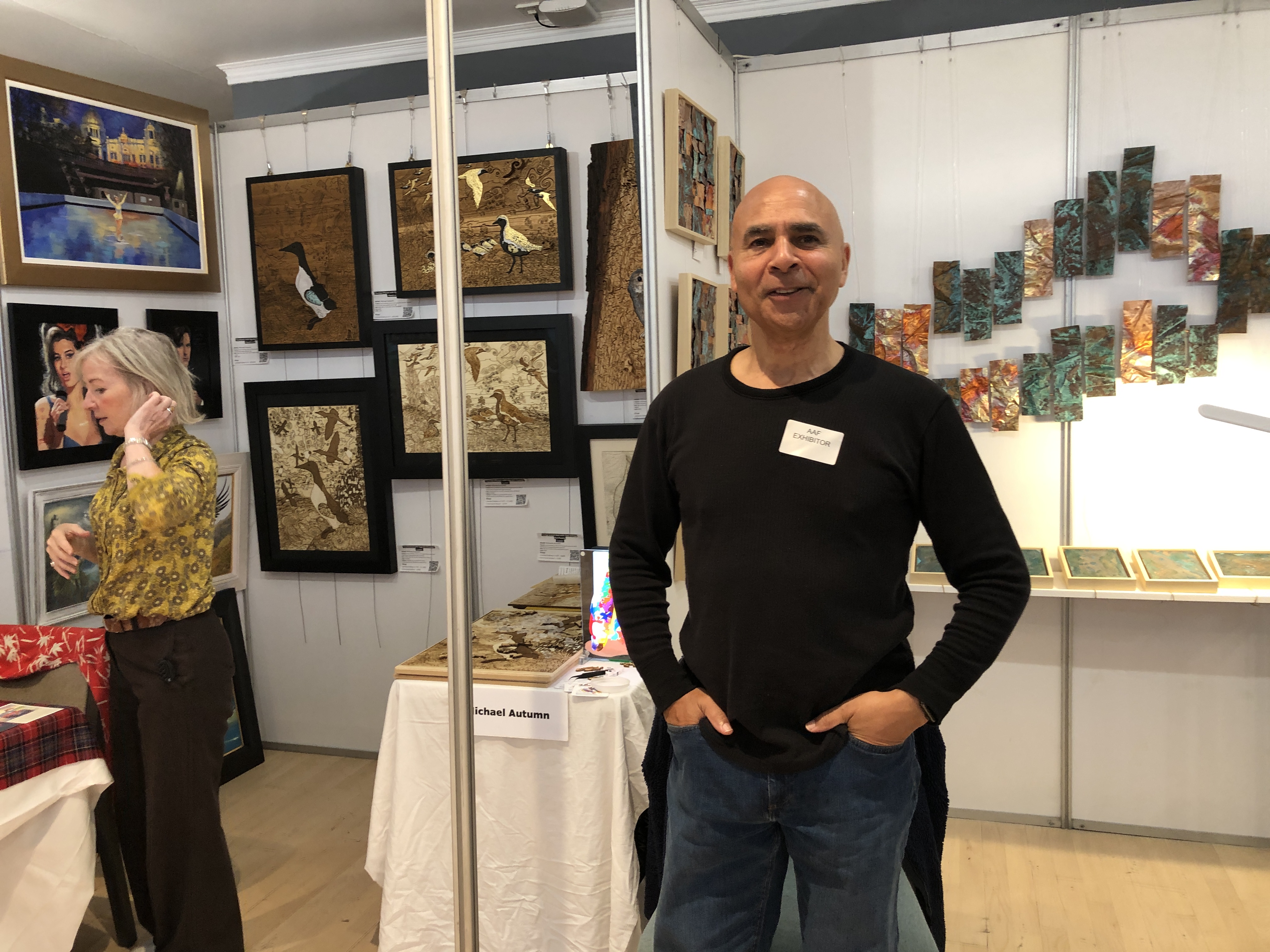
    Being new to the area, on 11th August I joined the Aberdeen Artists Society (AAS). Several days later while looking for art fairs in Scotland to try to exhibit at, I discovered that there was an annual art fair in Aberdeen between 30th August and 1st September. However, the deadline for applications was in March(!), and all places were obviously taken. I was naturally disappointed that I was so late to the scene.

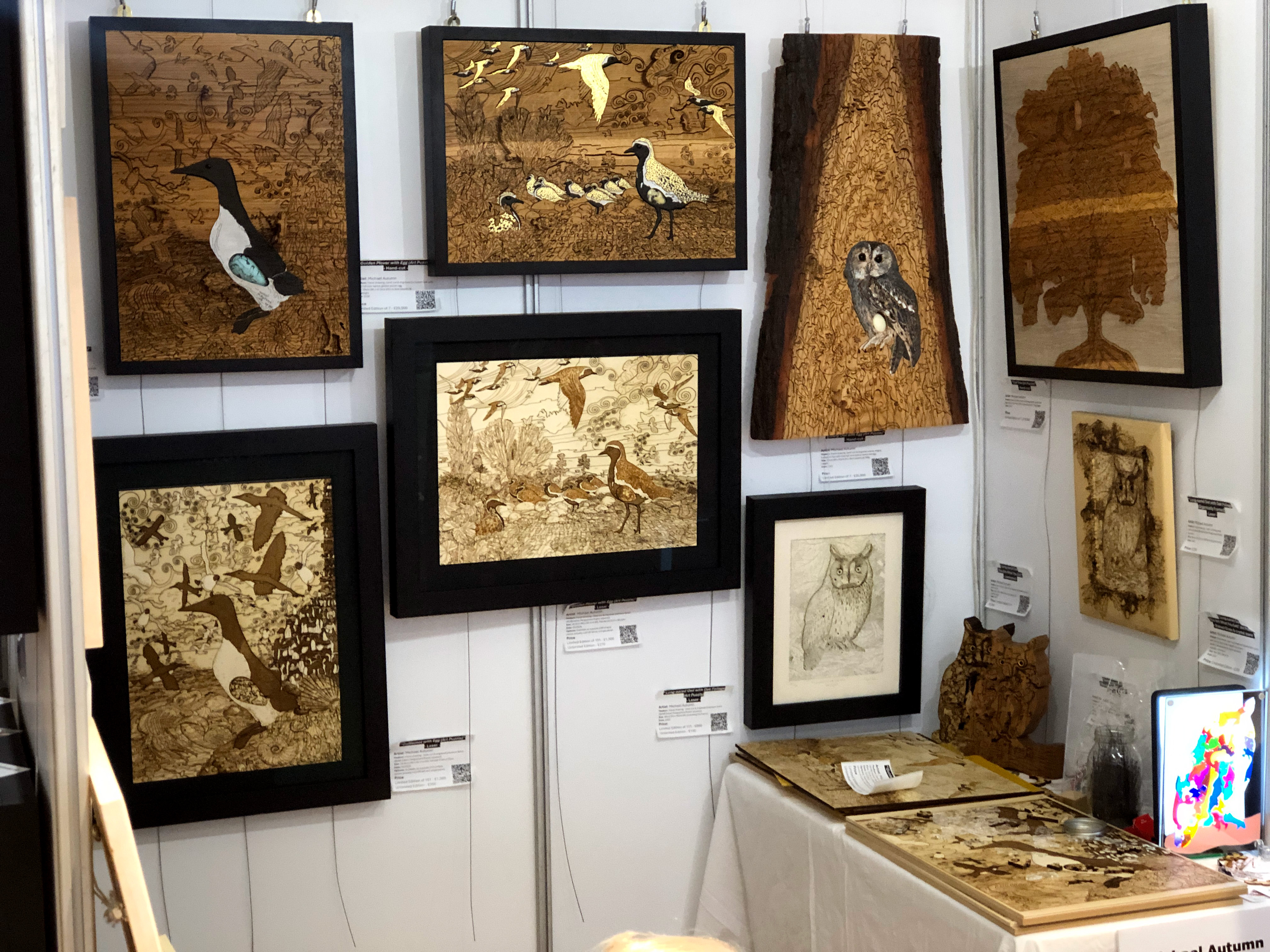
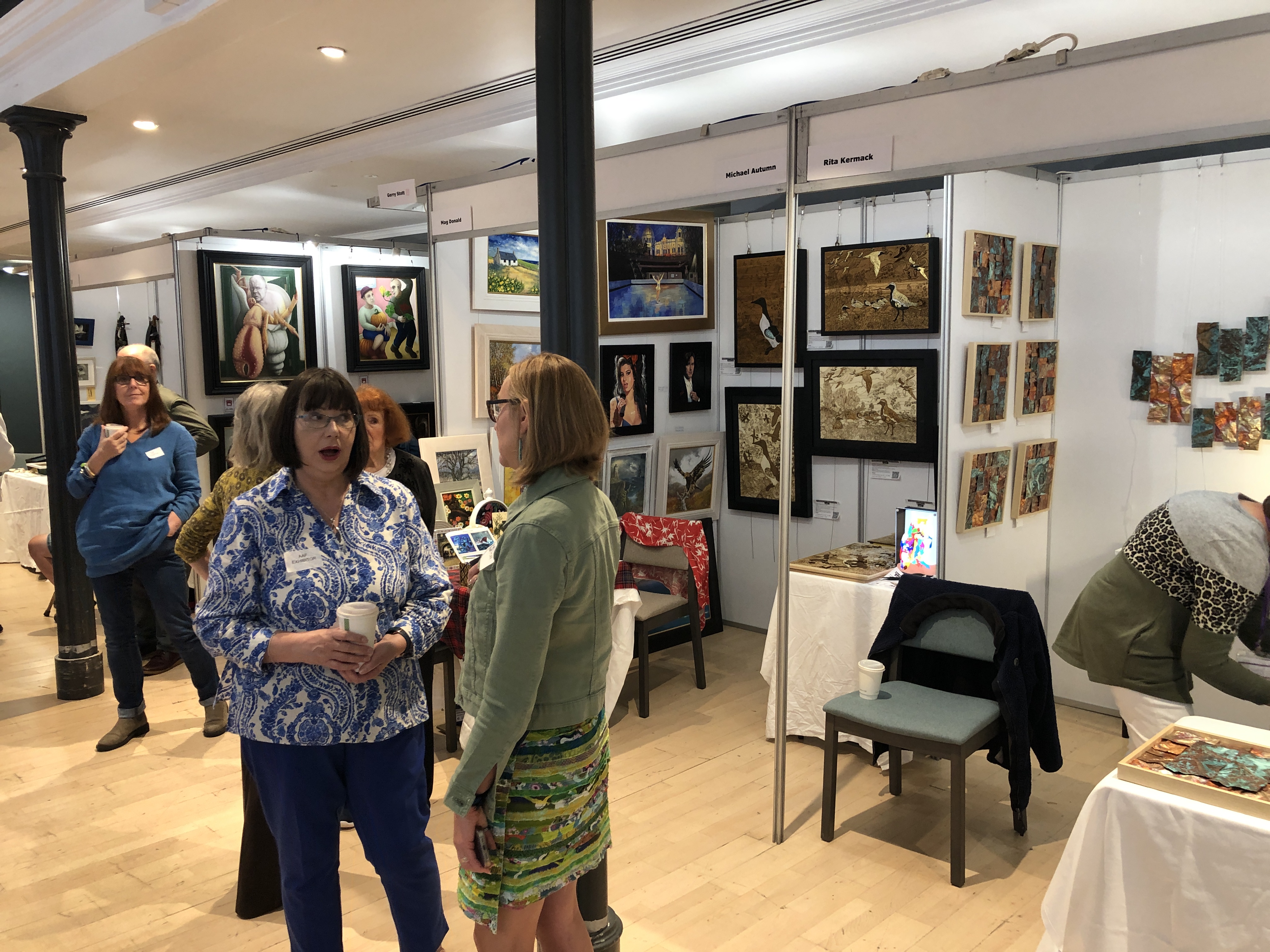
    Since there was a block-booking by AAS for a number of the available stands at the fair, I thought I would just message them in the very remote chance that there was a cancellation. The following week, Sunday, I woke up to discover an email back from AAS admin that there had been a cancellation – and anyone interested in taking it should reply. I couldn’t believe my luck and responded immediately – and asked for further details. At this point in time, I didn’t know I would get it – but was excited to be at least in with a chance… Later in the day I learned I could have it – a 3-metre stand (@2.4m high) and snapped it up. I had less than two weeks to prepare what I was going take. I have some number-ones of limited-edition artworks – which I like to keep for myself – and so I set about making additional copies of them (with frames). And I researched and bought a portable LED light panel to illuminate my “Long-eared Owl (Art Puzzle) – (You Are What You Eat) – Stained Glass”. This worked really well at the exhibition – and help draw people to my stand (when it wasn’t completely blocked).

    It was a very busy couple of weeks preparing for the exhibition, but I naturally wanted to make the most of this opportunity. I especially thought I should take all my hand-cut original thick solid oak art puzzles – that have never been seen in public before. These are large and heavy – too heavy for the provided hanging system – so I had to quickly source suitable ones of my own.

    Friday afternoon of the 30th was the setting up time – with a private viewing scheduled between 6-9pm. I was a bit late in starting but managed to complete my stand just after 6pm – when the guests (and friends of exhibitors) starting to arrive…
    My L-shaped 3m space (2m + 1m) was adjacent to a 2m stand jutting out at a right angle – which made the space ridiculously tight – effectively walled on three sides. It made putting up and taking down the artworks difficult because we were in each other’s way. This, coupled with my neighbour having a table at the mouth of our pitches – and who seemed to know everyone – and they all stopped for a nice long chat – meant that my pod was practically completely blocked a lot of the time…
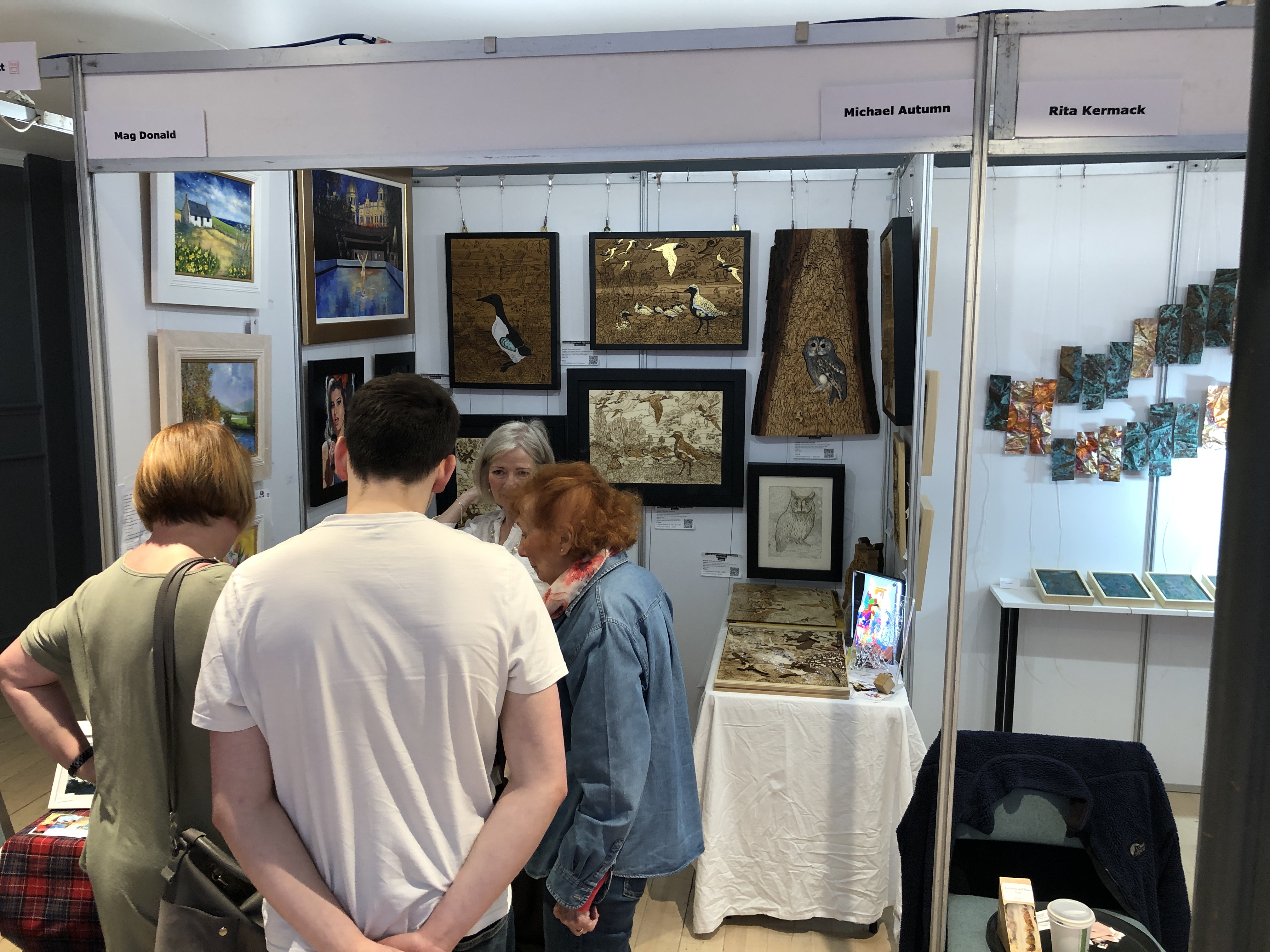
    I sold some pieces – including one to a former art curator (who said quietly to me “…this is the best work here…”) – so that was very nice.

    The genuine deep fascination of some people, very close inspection (by those who could get through!), and the very kind words – like “…these are absolutely incredible…”, “…it’s really made my day to come out and see your work…”, “…this is the best stand…”, “…this is my favourite stand…” – was incredibly, and indelibly, nice to hear – and extremely encouraging. I felt my artwork brought a little joy and thought-provocation to some of the people…

    It was also really nice to share the experience with my fellow exhibiting artists, and to share stories of our journeys, trials, and tribulations. For so long I have worked in complete isolation of other artists – and so it was especially good to get feedback from my peers…
  • A New Way of Seeing?

    Recorded music is ubiquitous and omnipresent: you can play it on a huge and growing number of devices, you can download it from millions of sites on the web, you can amplify it to play it as loud as you like, and you can choose the quality of the reproduction by the device you play it on (although quality of reproduction seems to be getting better all the time and at a more affordable price).Listening to music on the web in no way detracts from the quality of the reproduction or the pleasure you get from listening to it. Musicians and composers will generally not feel misrepresented if you listen to their creations via the web or on various players. There is something extra to be gained by going to a live performance or gig – which has much more to do with atmosphere and ambience – and this will probably always be the case. I would like art and photography to be as ubiquitous, omnipresent, and as accessible as music. Until now, to really appreciate art or photography (or any other two, three, four (video/animations) – dimensional images) you had to go and see them “in the flesh” as it were. This is very unsatisfactory for a number of reasons :-

    • It is severely limited by the number of people who can see the work.
    • It limits the times people can see the work (e.g. only during gallery opening times).
    • Access to close inspection is usually restricted for reasons of security or simply politeness (e.g. not wanted to get the the way of others!).
    • Lighting is generally difficult to control and so work may be viewed in less than idea conditions.
    • Some precious works may actually deteriorate by being exposed to light and uncontrolled atmospheric conditions.

    I set myself the challenge of creating a new web application to display still images on the web in the best possible way and to be accessible to as wide an audience as possible :-

    • It should work on any web browser.
    • The web browser should automatically maximize to fill the whole screen (where the browser permits this).
    • The images should automatically fill the whole browser display area.
    • It should have the option to fill the whole screen – without any browser clutter (e.g. toolbars, menus, scrollbars, status bars, address bars etc.) – so you can see the images as large as physically possible without any other distractions.
    • The image should “intelligently” fill the available space (initially – until you start zooming) in respect to its aspect ratio and the aspect ratio of the web browser or screen – without distortion.
    • There should be no limit on the size of the image – in terms of resolution (MBs/GBs) or physical size (H x W).
    • The image should be displayed at the highest possible quality or resolution for any given viewing scale.
    • There should be optional data about the image – i.e. you should be able to choose whether or not to display this information – easily and quickly. This should have the ability to display hyperlinks and other interactive web content.
    • There should be optional controls and navigation – i.e. you should be able to choose whether or not to display these.
    • To harness the full potential of the virtual gallery.

    I have been working towards this solution for the last 2 years (with a background of 25 years in computer architecture and software design), and, with a really big push in the last few months (and a huge sigh of relief!) – I have finally achieved my goal. The web application/tool is called iz2u™, and all the images you see in my portfolio and blog (Blog) use it. I have also started a new blog devoted to its’ development iz2u and feedback. (Please do not leave feedback about it on this (MA) blog as this is devoted to art and photography). Viewing images on the web with this new technology could actually be better in some respects than seeing them “in the flesh” : –

    • You can spend as long as you like studying the work.
    • You can zoom in to any part of the work (try doing this to the Mona Lisa in the Louvre!).
    • In principle you can supply any amount of supporting multi-media information.
    • You have the convenience of seeing the work any time and from any location.
    • Lighting conditions can be better controlled (art work can be scanned or photographed in perfect conditions, digital images remain in their native format).
    • There is no limit to the size of the images (you are however restricted to looking at them through the window of your computer screen).
    • There is no limit to the number of viewable images.
    • You can gain access to artwork and manuscripts etc. that are too fragile or precious to make accessible to the general public – thereby increasing the number of works available to show.

    There are some obvious drawbacks I can think of :-

    • There is nothing quite like seeing the image/artifact “in the flesh” – even though you may not be able to see it as well.
    • There is no replacement for the social experience and ambience of a gallery – similar to the real experience of going to a live performance or band.
    • The is no replacement for actually being inside a beautiful building and enjoying art in the context of architecture and history.
    • The role of the curator – in terms of juxtaposition, chronology, themes, aesthetics, etc. is missing. Having said that, there is a curatorial role in pure virtual galleries, for example, where the whole virtual space and experience has to be designed…

    Having developed this solution, I can see that there are many uniquely web-technology-based art projects waiting to be born. Watch this space…

  • Gallery #1 didn’t have the decency to reply…

    The gallery (which I shall refer to as Gallery #1 because there will be others) didn’t get back to me within a week so I decided to give them a call. I asked to speak to the owner (whom I named – I didn’t just say "may I speak with the owner" – the typical cold-calling approach!) but was told he was not in. I then started having a chat with the man who answered the phone. I said to him that I just wanted to make sure the owner had received my email – in this day-and-age of junk mail there was a good chance that he didn’t. The gentleman asked my name and said that the gallery receives maybe a dozen approaches from artists a day, that the owner generally checks all the mail, and if he hadn’t got back to me then the chances are he would not.

    The gentleman said that the gallery doesn’t have enough time in their calendar or space in their gallery to show all the work of their existing artists – let alone taking on new ones. He apologised and said that that was just the reality of the situation. I thanked him and that was the end of the conversation.

    I just feel that with a gallery owner making his living from hard-working artists – that at least he would have the decency to reply to a prospective artist who has approached him for representation. Suppose the situation was reversed: I was a famous artist, he was setting up a new gallery aiming for the big time, and he approached me… Did he ever stop to think how he might feel if I completely ignored him?

    He may live to regret it – who knows? The search goes on…