Category: Guillemot

  • Guillemot with Egg (floral map)- Artwork feelings

    Guillemot with Egg (floral map)- Artwork feelings

    It may be quite common for artists to write about how they feel about their work, but Iโ€™ve personally never come across it. This is probably just my lack of reading (Iโ€™m not a big reader, I usually only read to learn something specific โ€“ which is quite often).

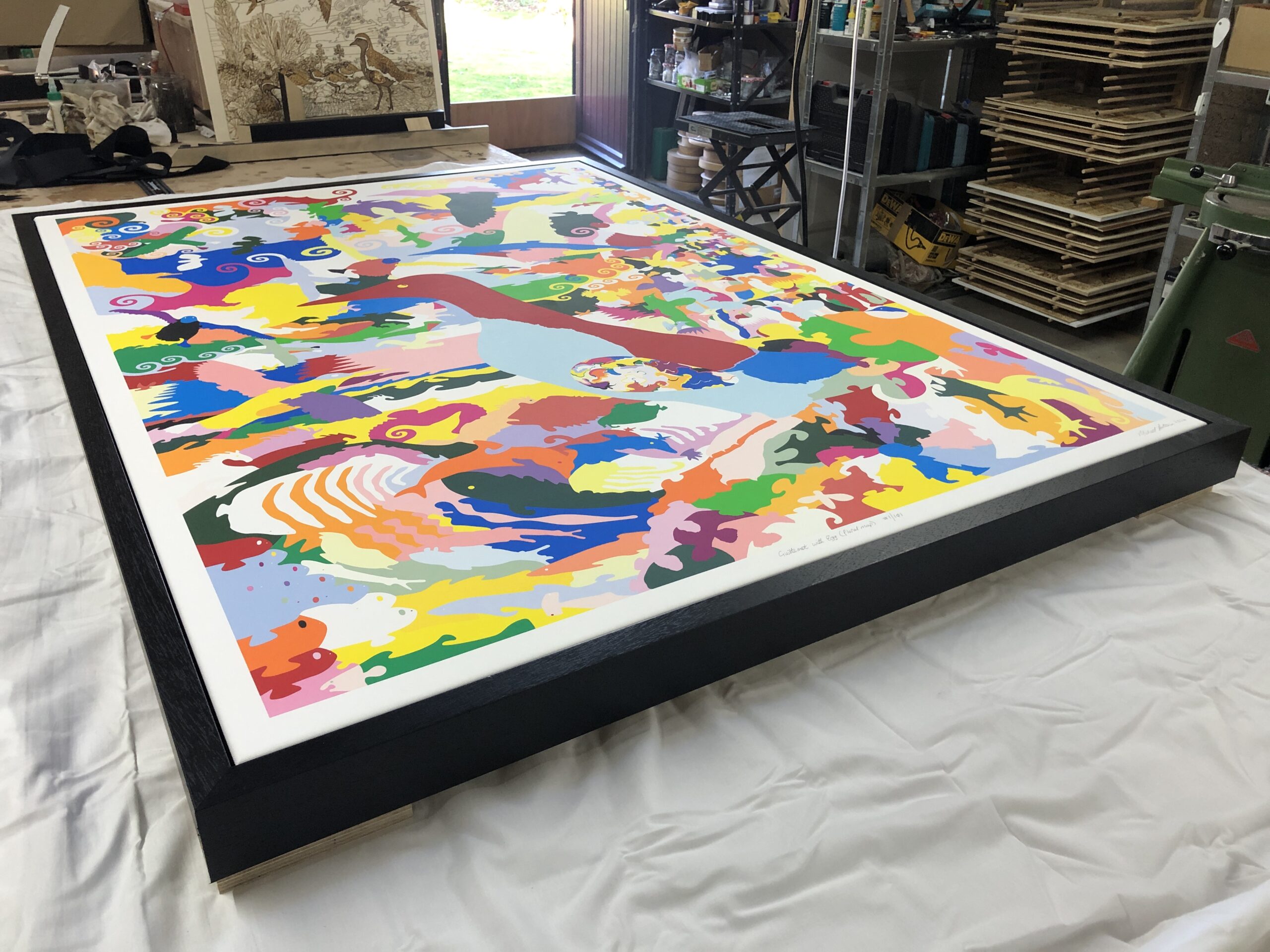
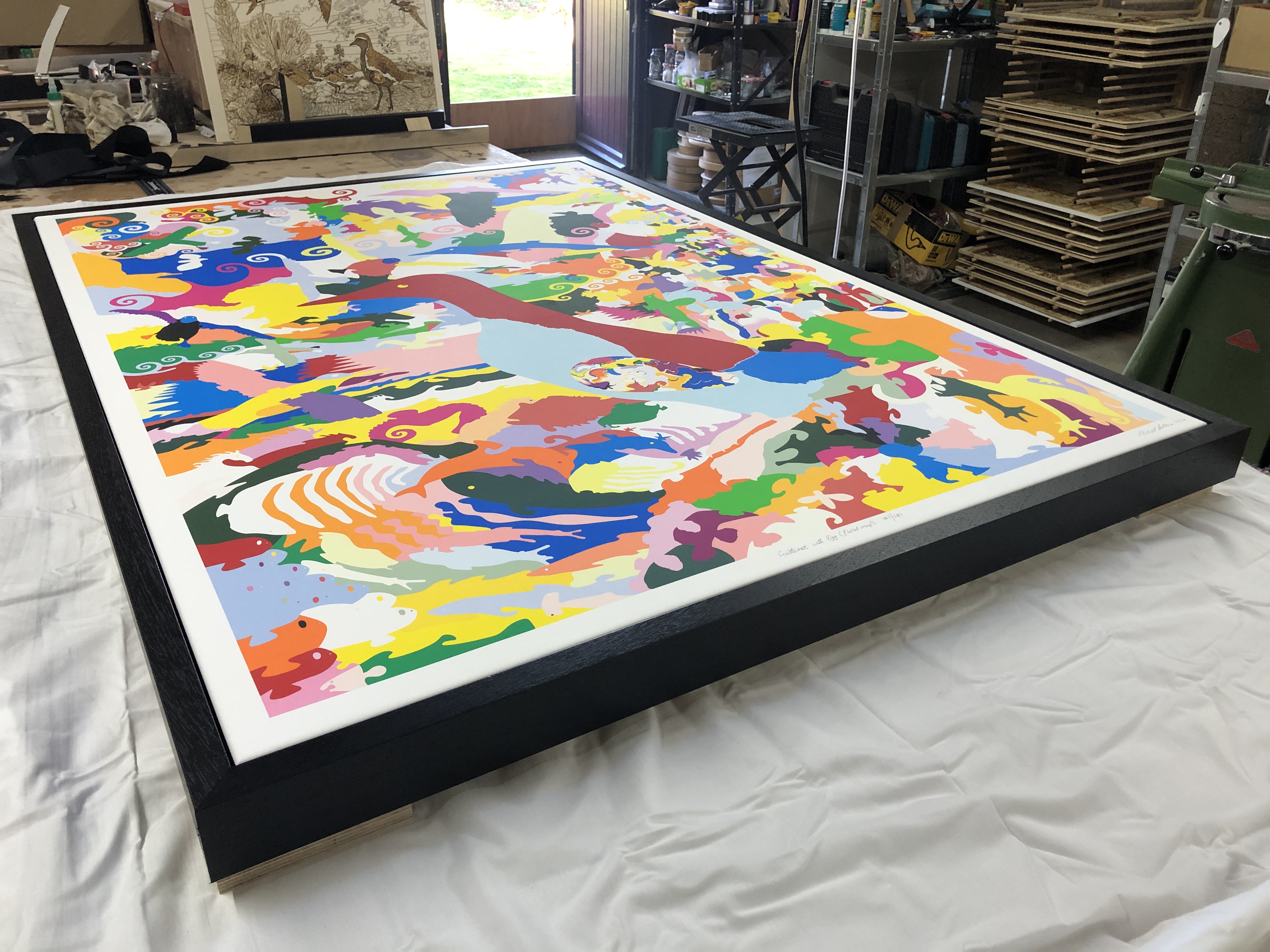
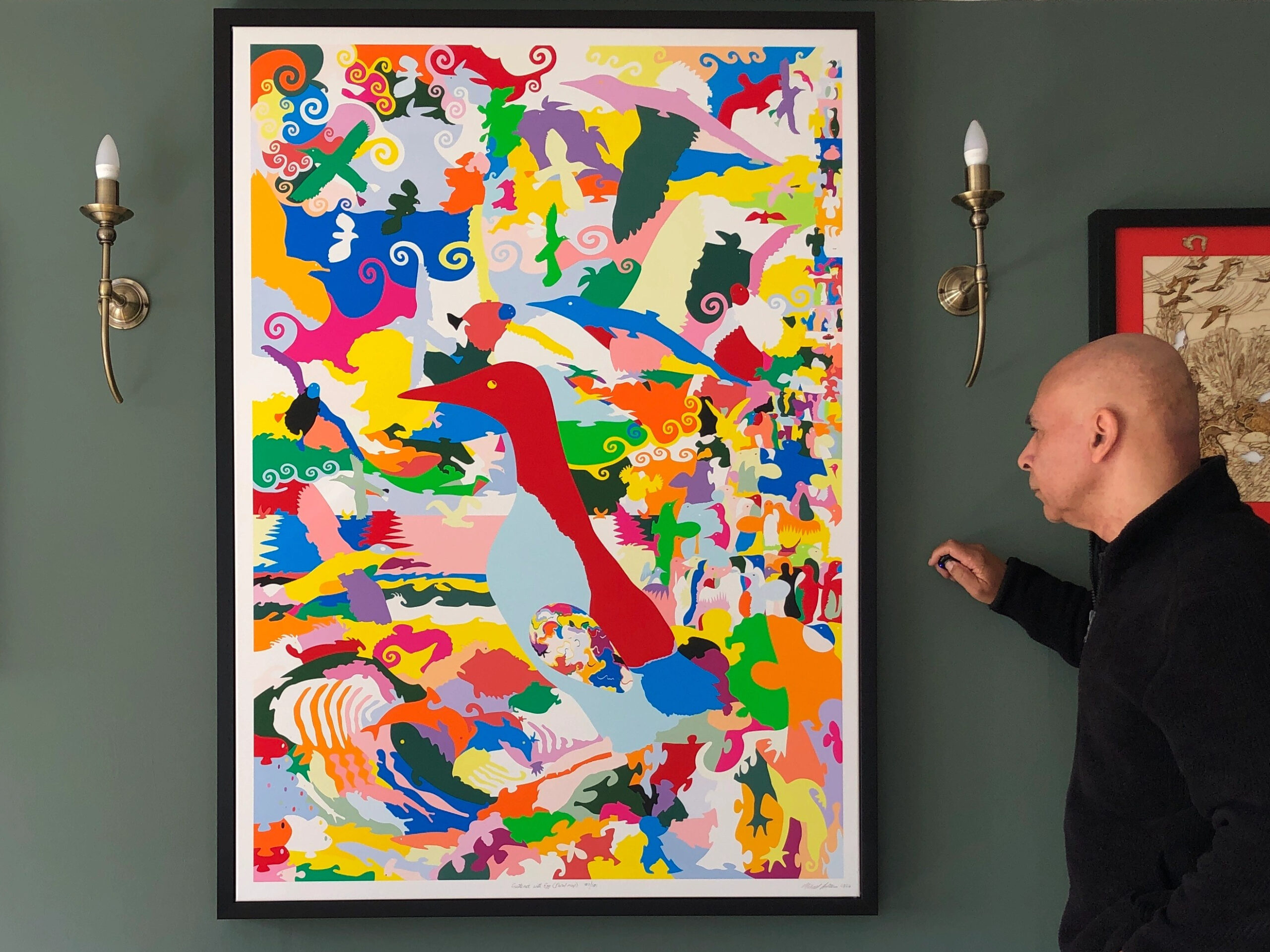
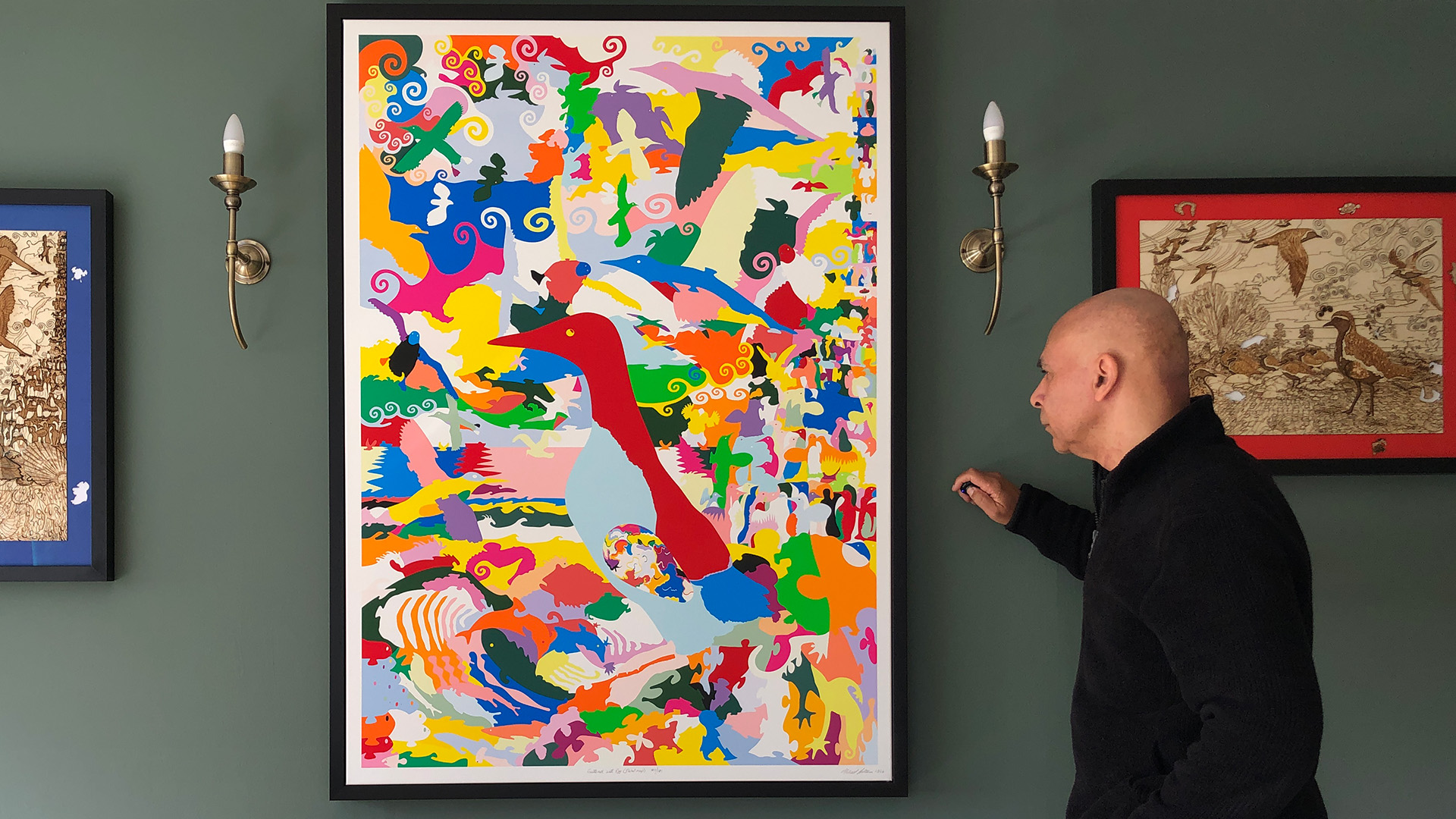
    Yesterday I framed this large canvas :-

    Guillemot with Egg (floral map)

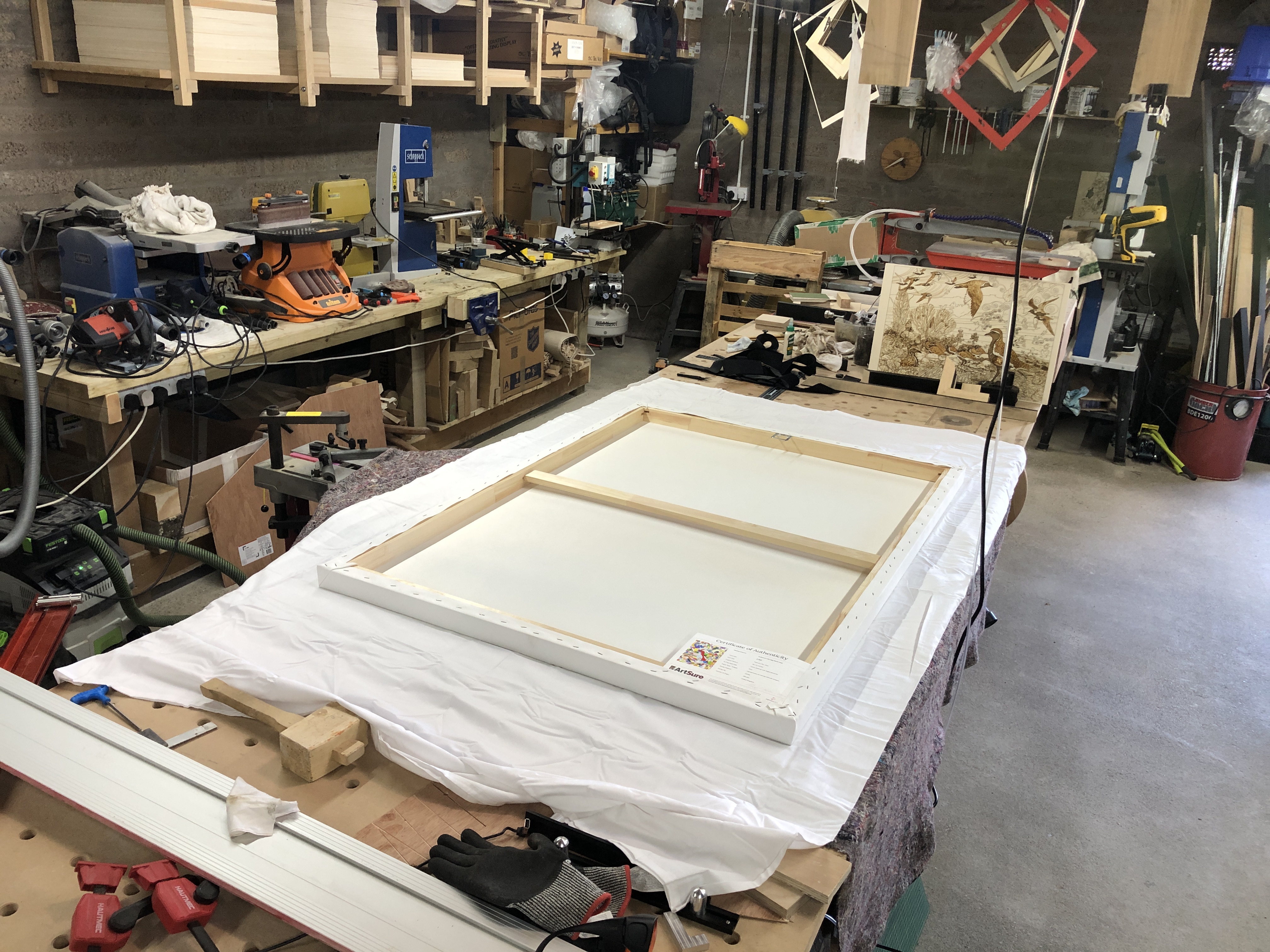
    After working on the back fixings, I turned it over to see the finished work. In all candour, I thought it looked really fabulous. The heavy black tray (float) frame made the colours pop even more, and the whites to appear whiter. I was really moved and felt a great sense of achievement.

    When I think back over the months I have spent on it, the weeks designing it, all the hundreds of hours drawing innumerable curves – that I have meticulously weaved and tweaked; all the colour choices and juxtapositioningโ€ฆ It feels it was definitely worth all the effort – and not inconsiderable cost. It was a truly joyous, uplifting, moment, and I felt very blessed and proud…

    This just reinforces why I cannot part with original artwork – and so steer clear from doing non-reproducible art. Most of my artwork I do primarily for myself: mainly to show and express my gratitude and wonder of Nature. Yes, I love to share my feelings of what moves me โ€“ often to tears โ€“ which is why I have invested so much time and resources into reproducibility (editions as opposed to original art). It is a real privilege that I can produce copies of my artwork, like this one, to a standard that I am very happy with โ€“ and can share with many others (some of whom are fortunate enough to have the resources to own copies)โ€ฆ This is immensely satisfying.

    If this work can give a fraction of the joy it gives me, to other people, then I am truly grateful and blessedโ€ฆ

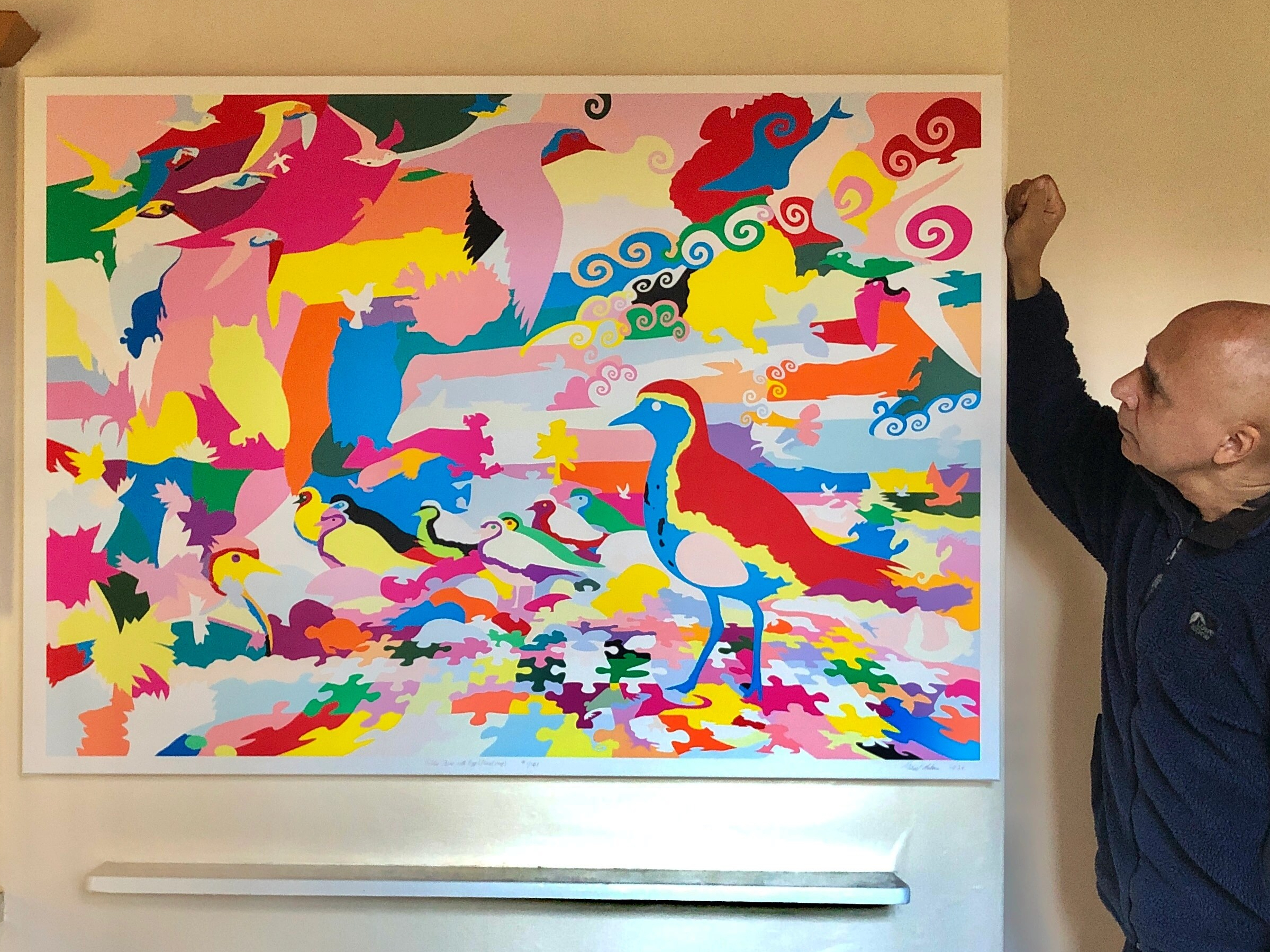
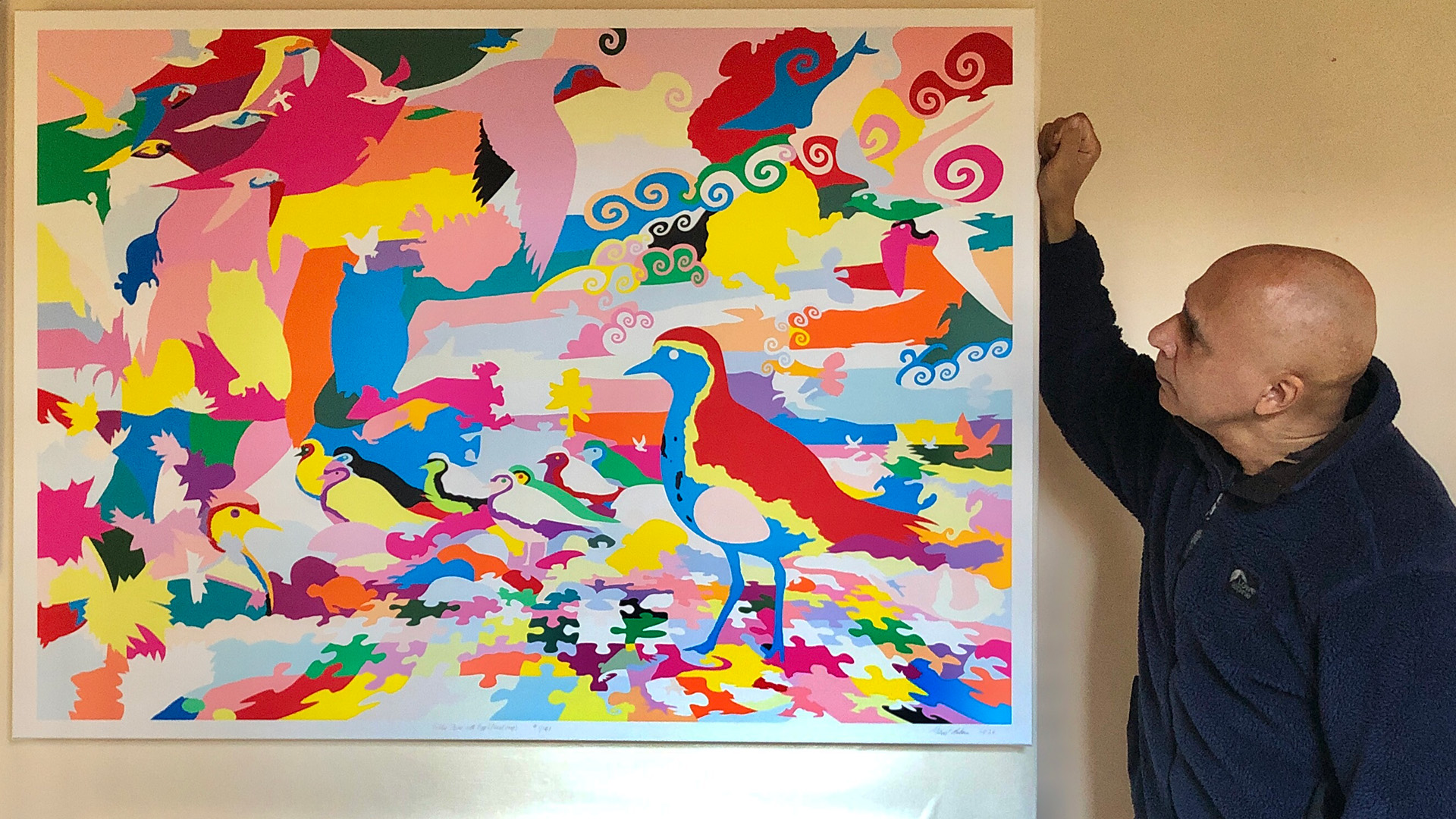
  • Golden Plover with Egg (floral map)

    Golden Plover with Egg (floral map)

    (Very low resolution for copyright reasons)

    Title: โ€œGolden Plover with Egg (floral map)โ€
    Artist: Michael Autumn
    Medium: Hand-drawing with digital gouache
    Giclรฉe archival print on fine 100% cotton canvas (matt)
    Hahnemรผhle Art Canvas Smooth 370gsm + Hahnemรผhle UV protection matt varnish
    Size: 51″ (W) x 36″ (H), stretched canvas 38″ (W) x 53″ (H)
    Edition: Limited Edition of 101
    Authenticity: Hand-signed (front, bottom, far right on white canvas border) with graphite pencil (varnished over with same UV-protective matt varnish as whole) and titled (front, bottom, centre on white canvas border)
    Date: 02/2024

    Just to give an idea of the size the artwork…

    TL:DR

    This artwork is an homage to visual perception โ€“ itโ€™s about how we detect meaning from the millions of individually coloured photons entering our eyes โ€“ and how I, as an artist, can trick you into seeing what I want you to see.

    Golden Plover with Egg (floral map) is the simple colouring-in (albeit very carefully selected and juxtaposed colours) of a flat line drawing I did previously of this art puzzle design (see photo below and this post: Golden Plover with Egg (Art Puzzle)).

    Golden Plover with Egg (Art Puzzle)

    I used this technique to regularly check for line breaks (where there shouldnโ€™t be any), and to get a better view of the shapes of the individual pieces I was designing โ€“ amid a sprawling mesh of simple black thin lines on a white background. This got me to thinking about the difference between the dumb mechanical process of colouring a shape (of a flood fill) and true animal (human) understandingโ€ฆ


    Promo video

    This is part of my floral map series. See Guillemot with Egg (floral map) for details.

  • Guillemot with Egg (floral map)

    Guillemot with Egg (floral map)

    (Very low resolution for copyright reasons)

    Title: โ€œGuillemot with Egg (floral map)โ€
    Artist: Michael Autumn
    Medium: Hand-drawing with digital gouache
    Giclรฉe archival print on fine 100% cotton canvas (matt)
    Hahnemรผhle Art Canvas Smooth 370gsm + Hahnemรผhle UV protection matt varnish
    Size: 36″ (W) x 50.9″ (H), canvas stretcher 38″ (W) x 53″ (H)
    Edition: Limited Edition of 101
    Authenticity: Hand-signed (front, bottom, far right on white canvas border) with graphite pencil (varnished over with same UV-protective matt varnish as whole) and titled (front, bottom, centre on white canvas border)
    Date: 02/2024

    Just to give an idea of the size the artwork…

    TL;DR

    This artwork is an homage to visual perception โ€“ itโ€™s about how we detect meaning from the millions of individually coloured photons entering our eyes โ€“ and how I, as an artist, can trick you into seeing what I want you to see.

    Guillemot with Egg (floral map) is the simple colouring-in (albeit very carefully selected and juxtaposed colours) of a flat line drawing I did previously of this art puzzle design (see photo of that artwork below and this post: Guillemot with Egg (Art Puzzle)).

    Guillemot with Egg (Art Puzzle)

    I used this technique to regularly check for line breaks (where there shouldnโ€™t be any), and to get a better view of the shapes of the individual pieces I was designing โ€“ amid a sprawling mesh of simple black thin lines on a white background. This got me to thinking about the difference between the dumb mechanical process of colouring a shape (of a flood fill) and true animal (human) understandingโ€ฆ


    The story behind this artwork is part intentional, part serendipity, and partly the indirect fruits of some non-trivial computer programming I did many, many, moons ago…

    I am immensely impressed, and deeply bewildered, by our ability to visually perceive our environment. As you might know, typical adult human beings have about six million cones in our eyes to effectively detect pixels of coloured light (photons) in daylight (rods are used in low-light/dark conditions). Each detected pixel of light is to all intents and purposes completely independent of each other โ€“ and the eyeโ€™s cones are simple colour detectors of light coming into the eye โ€“ not in themselves capable of making any sense of the totality of what the all the other cones are measuring โ€“ they simply pass what they individually detect to the brain (via the optic nerve). It takes one of the most impressive and complex machines in the universe โ€“ a brain โ€“ to interpret these patchworks of colour.

    The brain compares all the pixels together, detects edge boundaries, and uses its vast database of previously classified images (and parts thereof) to try to understand the current image. And by understanding the image I mean recognising the individual objects within it. Without the aid of a vast memory and very sophisticated pattern-recognition, reinforcement, and continuous learning โ€“ making sense of what we see would be impossible โ€“ and we simply wouldnโ€™t survive. Why? Because we wouldnโ€™t be able to find food and water, avoid danger, and move about pursuing our instinctive goals – build and maintain a shelter, avoid various dangers, find a mate, reproduce, etc… That’s not to say that the brain never gets things wrong. In fact, our brainโ€™s insatiable appetite to pattern-match and classify what it โ€œseesโ€ is so strong that it is sometimes fooled into โ€œseeingโ€ things which arenโ€™t thereโ€ฆ Anyone ever seen elephant-shaped clouds…?

    Since about 2021, I have been exploring the physical and metaphorical world of puzzles โ€“ particularly those in Nature: things that are camouflaged, paradoxical, ambiguous, double-entendre, things that are not what they seem. I have been expressing this through the medium of actual visual puzzles โ€“ jigsaw puzzles with a twist, and a completely different purpose โ€“ the purpose of expressing ideas rather than a challenging pastime. I call them art puzzles.

    I start by hand-drawing a full size completely imaginary, but plausible, nature design of a main bird in an appropriate landscape (which takes me a long time – by far the bulk of the total), and then I physically cut out the puzzle (usually in wood). While designing the artwork for these intricate puzzles โ€“ with an eye for structurally interlocking pieces (which are often heavily disguised) โ€“ I periodically check that the cut lines all work โ€“ i.e. that there are no gaps where there shouldnโ€™t be any, and all the pieces cut out cleanly (i.e. not stuck together anywhere).

    This checking is important because, while I cut the pieces by hand for the first three years (and could compensate for any imperfections in the drawings), I have an eye on getting them cut by a computer-controlled machine โ€“ waterjet, laser, or some other technology โ€“ so I have to make the drawings โ€œperfectโ€. As many of you will know, if you provide instructions to humans, you can get away with some imperfections and inaccuracies because an intelligent human being is likely to still achieve the correct result โ€“ compensating for your mistakes and imperfect measurements/instructions โ€“ because they can guess at your intentions. But most of you will also know that you canโ€™t get away with anything when a computerised mechanical machine does the work: it will do exactly what it is told โ€“ no more, no less โ€“ because it has no notion of what it is supposed to do.

    Zooming in on a complex detailed drawing and looking for gaps of where lines donโ€™t join where they should – is a very tedious, long-winded, task โ€“ and itโ€™s difficult to be certain youโ€™ve properly checked everywhere. So a while back I got the idea of flood-filling the areas to see if there are any leaks. For those of you not familiar with the term, flood-filling is an automated way of filling an area of colour – of any complexity – with a new colour. It is not filling the whole image with colour โ€“ that isnโ€™t much use. It fills/puts the new colour everywhere that is the same colour as the original point (pixel) colour โ€“ and here is the subtle bit โ€“ the colour has to be connected to the original point. To illustrate this, here is a sequence of pictures showing a small detail of my gap-finding process :-

    Detail of the drawing with no gaps

    Detail of the drawing with a small gap – can you see it…?

    Detail of the drawing with red arrow showing a small gap

    Detail of the drawing with flood fill going through the gap

    Detail of the drawing with flood fill confirming gap fixed

    Detail of the drawing with various flood fills showing good gap integrity


    So where does the computer programming part come in – that I mentioned in the introduction? Well, many, many, moons ago – when personal computers were just emerging, I started a career which involved creatively using IT to help people with special needs โ€“ recreation, communication, education, etc… One of the most rewarding projects I took on was to design an art program that would enable people who could reliably press one, two, or three buttons with any part of their body – to draw and paint on the computer – and print out their colourful creations. (I was an artist long before I got involved in computing, and so this was particularly interesting to me.) My main customer and inspiration for the program at the time was a very talented mouth-artist, called Mary, whom I was very ambitious for. I wanted to provide for every feature she asked for – in addition to those I thought should be there. One day while doing quite a complex design with the program, Mary asked if it was possible to change the colour of part of her picture. It wasnโ€™t at the time, but I set about designing the feature. To my knowledge it hadnโ€™t been done before, and it turned out to be quite challenging (it took me about a month to crack it). These days it’s common in art programs, and is something most people take for granted. But solving the problem from scratch was very satisfying and gave me insights to its many possibilities (including solving any 2D line-drawn maze of any complexity)โ€ฆ

    The serendipitous aspect of this artwork lies in when I realised that the various flood fill tests I was doing during the course of designing the original art puzzle – were actually quite appealing in their own right. While I was only using a few simple random colours for my tests, I thought that with a harmoniously selected floral colour pallet and careful colour juxtapositions, I could make a really attractive design… I parked the idea at the time because I was engrossed with my original intention, but I did come back to it this year. It took quite a long time to arrive at the final design, and printing the colours correctly (i.e. as I envisioned and designed them on my computer) was really tricky (as usual!). Printed on the best available printer with the most archival inks. Best UV protection matt varnish.

    I really like it, and itโ€™s like nothing Iโ€™ve seen beforeโ€ฆ

  • Artist Anxiety

    Artist Anxiety

    There are many different types of artist and many types of journeys in creating a work of art. Much art in the last century is what I call utter rubbish – slipshod, slapdash – made within minutes to a few hours or a day or two. And it shows. For example Pollockโ€™s drip โ€œpaintingsโ€, or Hirstโ€™s โ€œspinโ€ โ€œpaintingsโ€. Most of it is utter contemptible rubbish in my humble opinion. Even many of the Impressionistโ€™s work was done in a day – often outside with a portable easel and done in a single sitting (however, purely aesthetically, I do like a lot of work from that period from that art movement).

    Iโ€™m certainly not saying that the more time and effort spent on an art work the better it will be – and vice se versa. I’m saying that the more effort an artist puts into their work the more I will respect it and the more I will try to understand and appreciate it – and the better quality it is likely to be. This seems obvious to me…?

    Consider a book of a handful of words compared to one of 100,000 words… The latter usually is expressing much more than the former. But a 100,000-word book is not necessarily saying more that a 10,000-word book. The former could be very waffly and poorly structured. Whatever one is trying to express there is usually some minimum or ideal way of expressing it (for the target audience)… My general point is that something expressed very briefly or quickly is usually not expressing very much – compared to something where a lot more time and effort has gone into it…

    Iโ€™ve been working on a piece called โ€œGolden Plover with Eggโ€ (Jigsaw puzzle) for over ten weeks now, and Iโ€™m coming to the final stages – where things are finally starting to take shape – and, at last, Iโ€™m beginning to feel good about it. Often through the long arduous hours – many of which have been physically very demanding – Iโ€™ve been deeply anxious. Why am I doing this? Why is it taking so long? Am I wasting my time? Will anyone appreciate it?

    Not that I am doing it for money (more on this later), but will the work be worth anything? Will it have a value that is reflective of the effort I have put into it ? Iโ€™ve worked in I.T. for many years where I was paid quite a high hourly rate. What I would earn in three months (because I have about another two weeks work to go on my current piece) was a not inconsiderable sum. What might my hourly rate be for this piece…? (Not that I will sell it, but I will hopefully sell other editions of it…)

    The peculiar thing about art is that some art created in a slapdash fashion sells for thousands, if not tens – or even hundreds – of thousands, of pounds (ยฃ) – making the hourly rate absolutely ridiculous. Picasso made about 46,000 works of art in his lifetime – many of which were created well within a day. So his hourly rate was in excess of ยฃ100,000!

    Some art takes hundreds of hours – and sells for a pittance – making the paid hourly rate utterly pitiful – and puts a contemptible value on the artistโ€™s time/life. Clearly there is no relationship between an art workโ€™s value and the amount of time and effort that went into making it. Yet, for most other goods in society, the more time taken to make them the more expensive they are. Itโ€™s a very strange world we live in…?

    Why do I do art – I keep asking myself?! I donโ€™t have to. Unlike some artists, there are plenty of other things I could do – and have done – for a living. The simple answer is: I donโ€™t really know! I just know that I like making things and commenting on things that interest me.

    Yesterday, while working on โ€œGolden Plover with Eggโ€, I was thinking why I do art – and this piece in particular? Itโ€™s so much work, effort, and cost (the raw materials and special tools are expensive)?! Mahlerโ€™s beautiful Symphony No. 4 was playing in the background, and I thought of the effort he must have put into composing that sublime masterpiece – the trials and revisions that it must have gone through. I wonder what emotions and motivation drove him to do it, the frustrations he experienced, the ups and downs he went through, the anxiety he felt of what others might think of it…? He was a fellow artist, so I thought I must share some of his emotions and anxieties…?

    Malher didnโ€™t have to compose that symphony. No one asked him to do it (as far as I know). Possibly something inspired him, but, like many great works or inventions, inspiration is one thing, implementing it is quite another… Something in his deep psyche drove him to do it. No one told him how long it must take. He just set about doing it, and didnโ€™t stop until he was satisfied with it. And all through the journey he will have applied his skills as a musician, and his heart and sense of aesthetics to evaluate and refine it. He would have been striving for a level of quality acceptable to him – and only him.

    There are no rights and wrongs with art – so there are no objective ways to judge it, or to know if the objective has been achieved. Well thatโ€™s not strictly true. In each form of art there are usually a few ground rules. Like music for Mahler, I guess he ruled out discordances, wanted to use (or felt he should use) certain instruments, and he possibly wanted four movements – because that was the standard Western classic symphonic tradition he was raised in?

    He had to figure out how to make the sounds he wanted – or at least make sure it was practically possible – i.e. playable and audible. So finding a practical solution to each and every note, phrase, passage – were upmost in his mind. He possibly followed other music rules that we donโ€™t know about (because he didnโ€™t write them down), and those Iโ€™m not competent to know or understand.

    However, the vast majority of the huge number of decisions that go into the artistic creative process are entirely subjective. Do I like everything? Do all the pieces โ€œgoโ€ together? Do they โ€œgelโ€ together and create some form of harmony? If not, what can I change so that they do? Is it good enough? How can I improve it? What am I trying to say or communicate with this? Is what I want to communicate interesting and/or important? Have I achieved my goal/s? Is it finished? (I certainly donโ€™t believe all, or even most, artists think like this – but the best ones do…)

    I think Edisonโ€™s phrase: โ€œGenius is 1% inspiration and 99% perspirationโ€ is a gross understatement. I think itโ€™s much more like 0.0001% inspiration – or even less – and the rest perspiration!

    Back to my thoughts yesterday and Mahlerโ€™s Symphony No 4. While listening to all four movements, I thought how each was utterly sublime, perfect, and complete on their own – yet Mahler created a unified whole with them all. A staggering and wonderful achievement that enhances and enriches anyone who listens to it. It occurred to me that possibly only artists fully appreciate other artists – because they will have some insight into, or empathy for, the effort and emotion that has gone into the creative process…

    I donโ€™t know what drives artists to create unnecessary, uncalled for, unusable, works of art, but listening to Mahlerโ€™s Symphony No 4 I thought: โ€œthank god they doโ€…

    I think back to my last piece – โ€œGuillemot with Eggโ€ (http://michaelautumn.wordpress.com/2020/03/01/guillemot-with-egg-jigsaw-puzzle/) – which took a similar amount of time and effort as my current piece – and I forget all the effort, trials and tribulations that went into designing and making it. It may seem strange, but I love to look it, and Iโ€™m just so glad I did it! Itโ€™s such a huge sense of achievement – of fulfilling something that was such a tall order. If it was easy many people would do it – and it wouldn’t be such a sense of achievement…?

    Itโ€™s very nice that other people seem to like it, but thatโ€™s not why I did it. And they will have no idea of the amount of work, sacrifice, and emotion that went into it. But hopefully it communicates something to them – about the ideas I was trying to express – that no other form of expression could achieve…

    But why, oh why…? And does anybody apart from me really care…?