Tag: painting

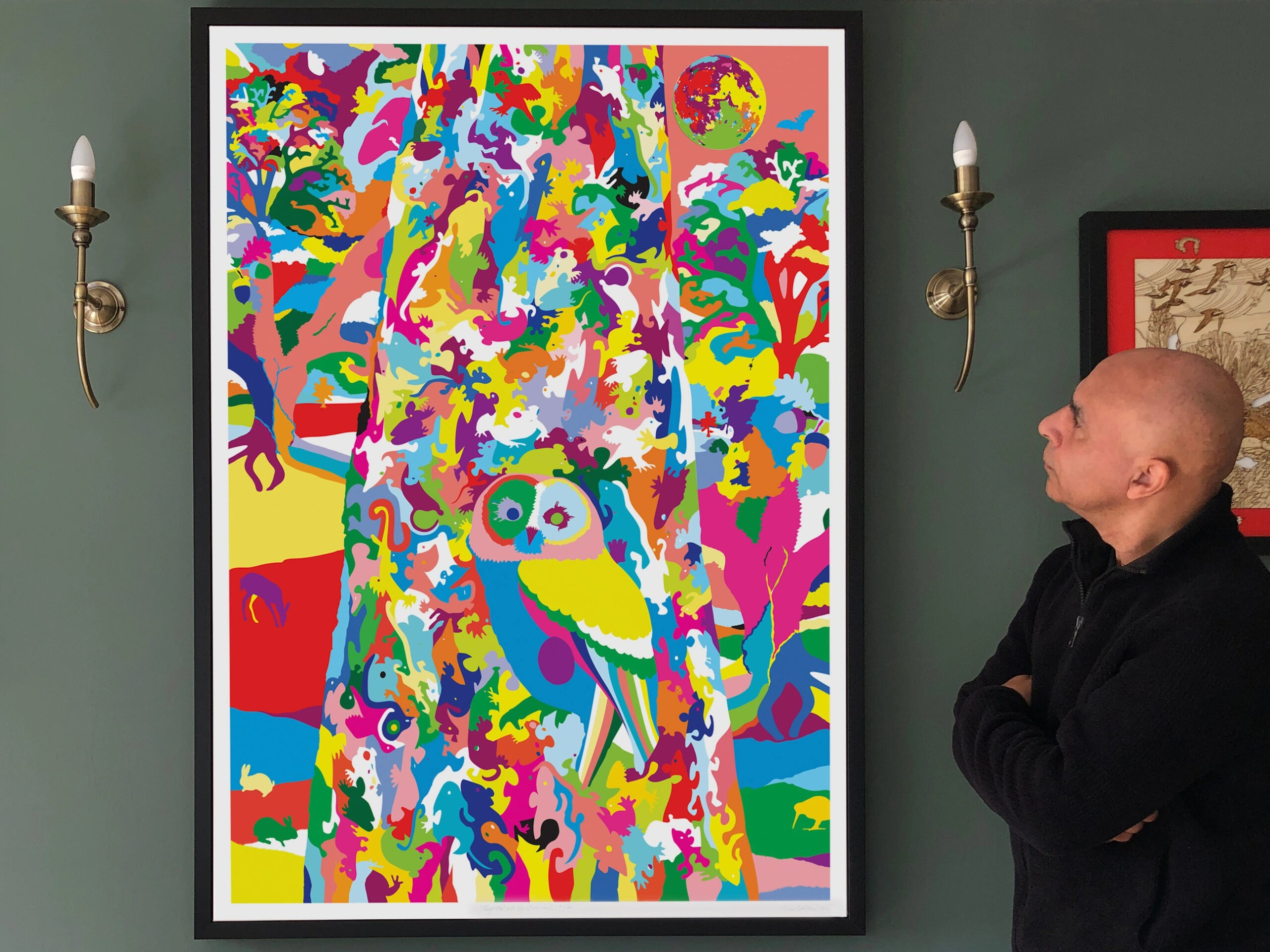
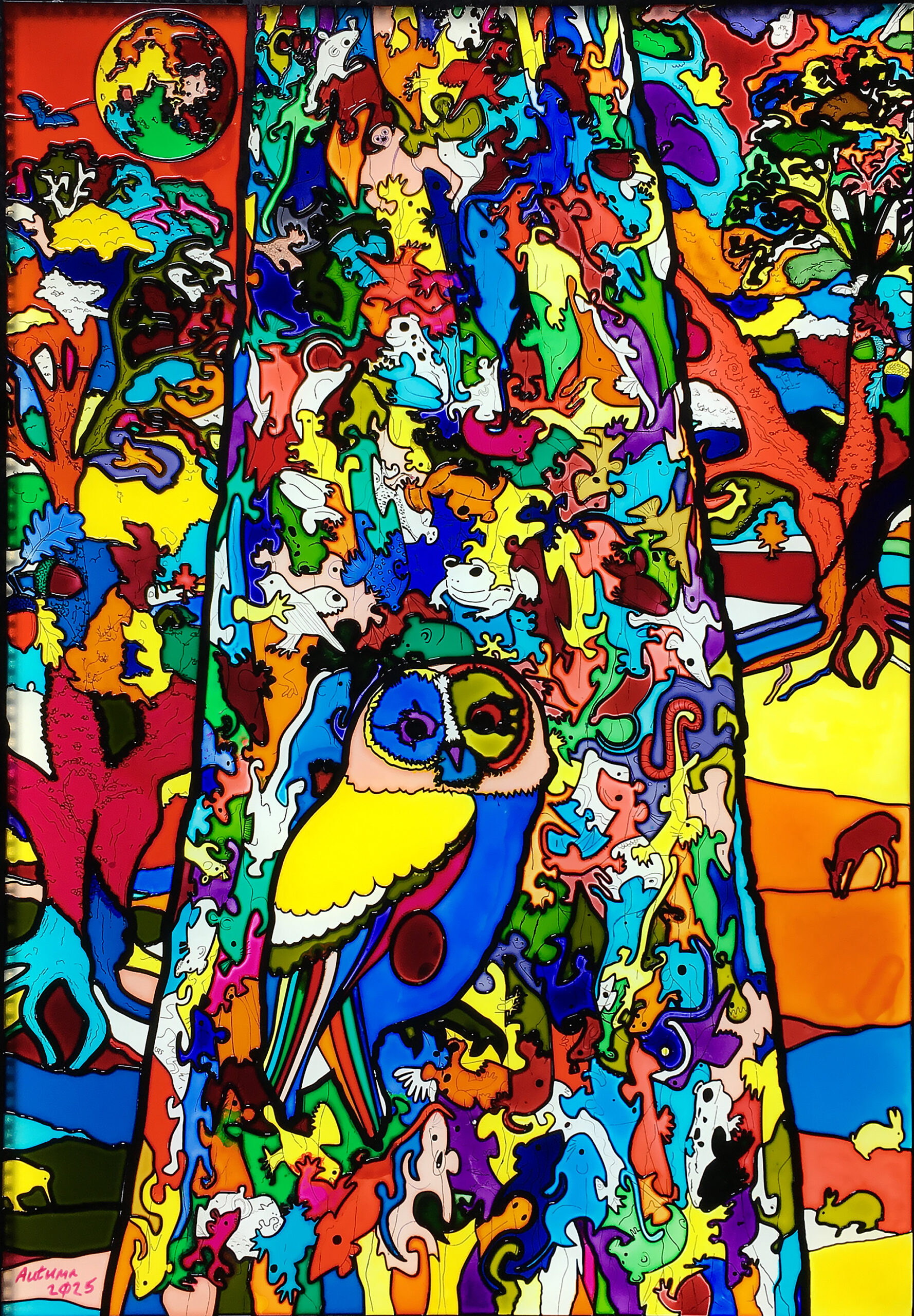
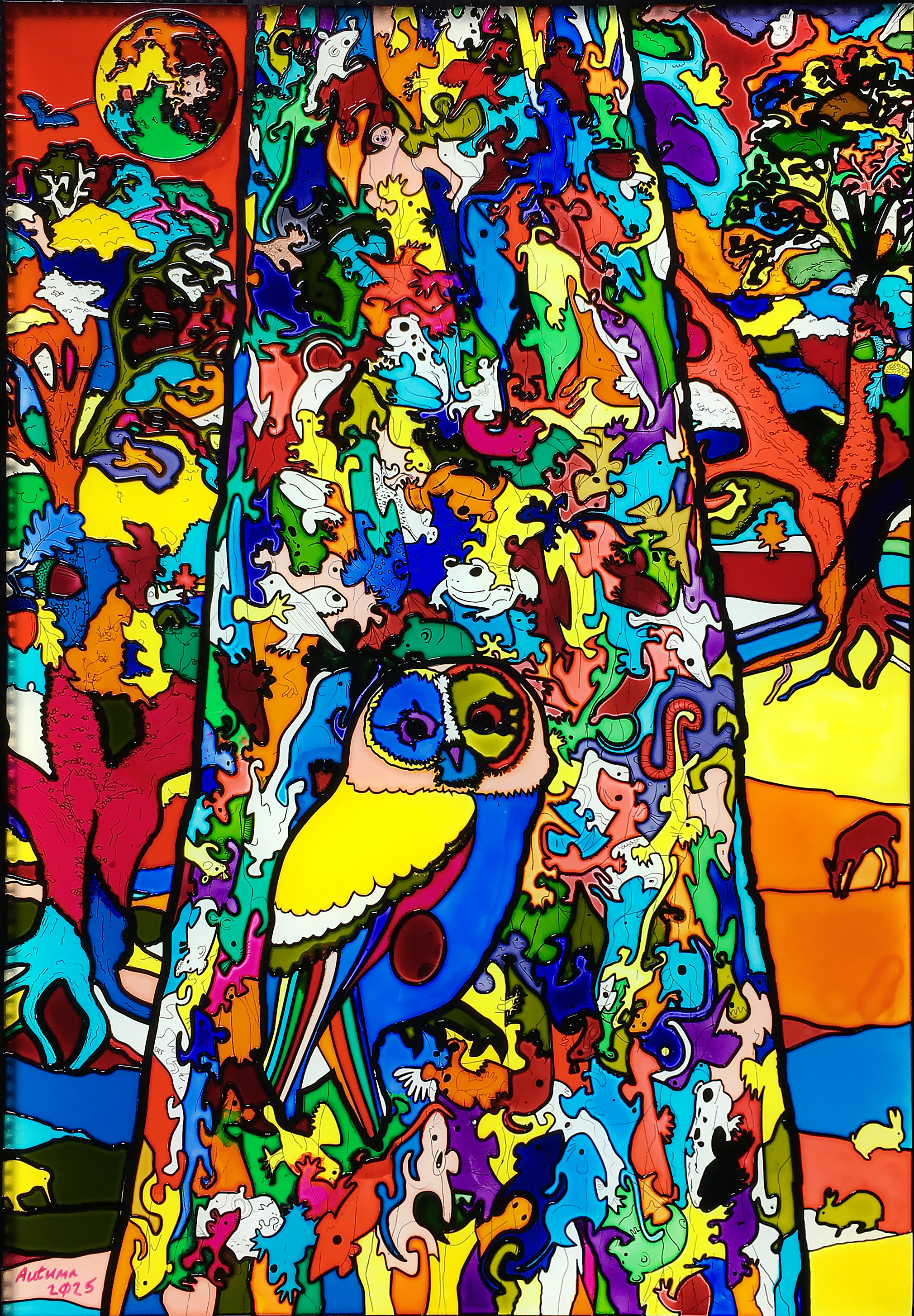
  • Tawny Owl in Landscape (Predator and Prey) โ€œStained Glassโ€

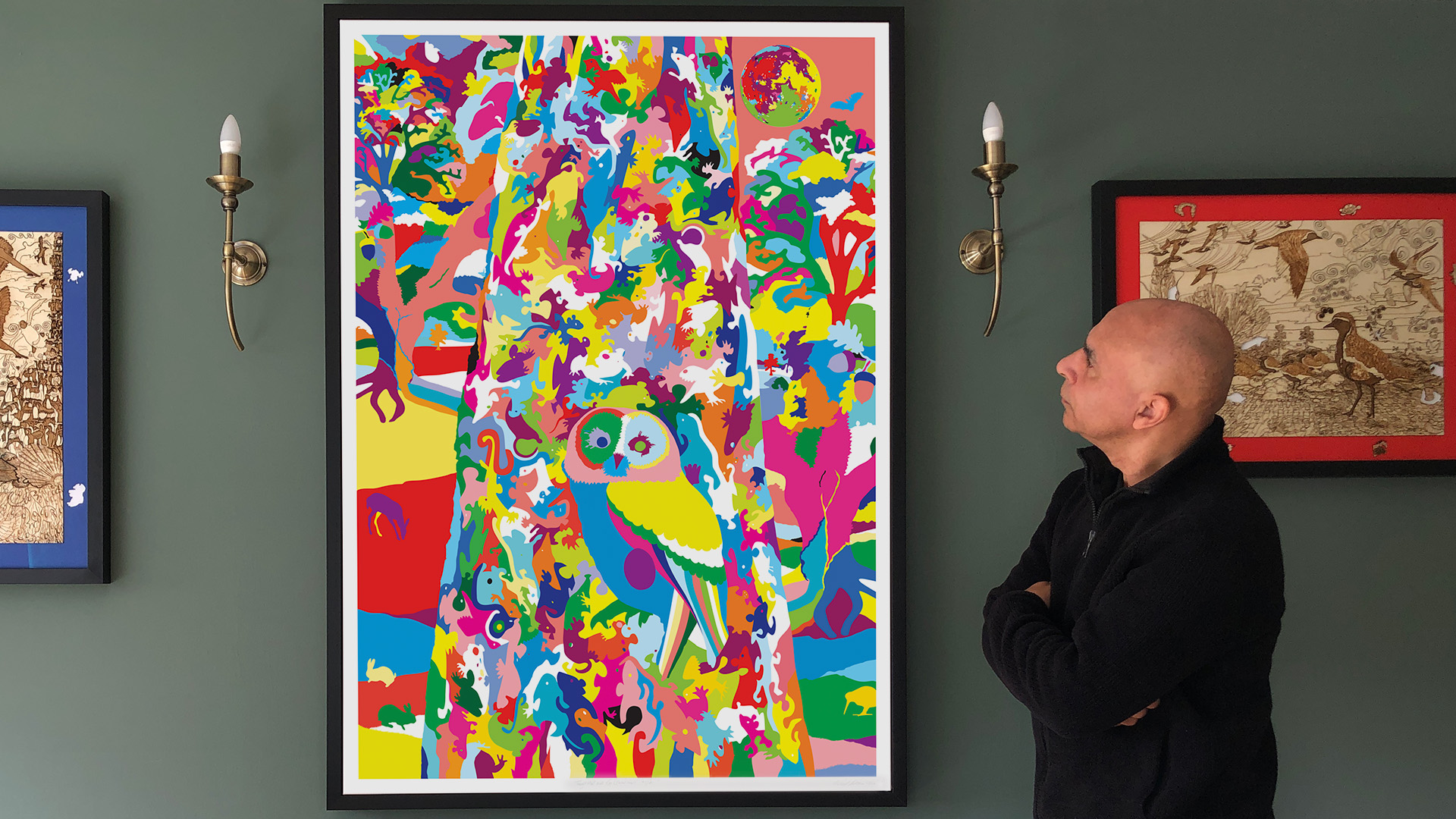
    Tawny Owl in Landscape (Predator and Prey) โ€œStained Glassโ€

    Title: โ€œTawny Owl in Landscape (Predator and Prey) (floral map)โ€
    Artist: Michael Autumn
    Medium: Resinous glass paints on faux leaded (composite plastic) clear cast acrylic sheet
    Size: 60cm (W) x 85cm (H)
    Edition: Original
    Authenticity: Hand-signed (bottom, far left) with purple glass paint on light pink painted cloisonnรฉ cell.
    Date: 02/2025


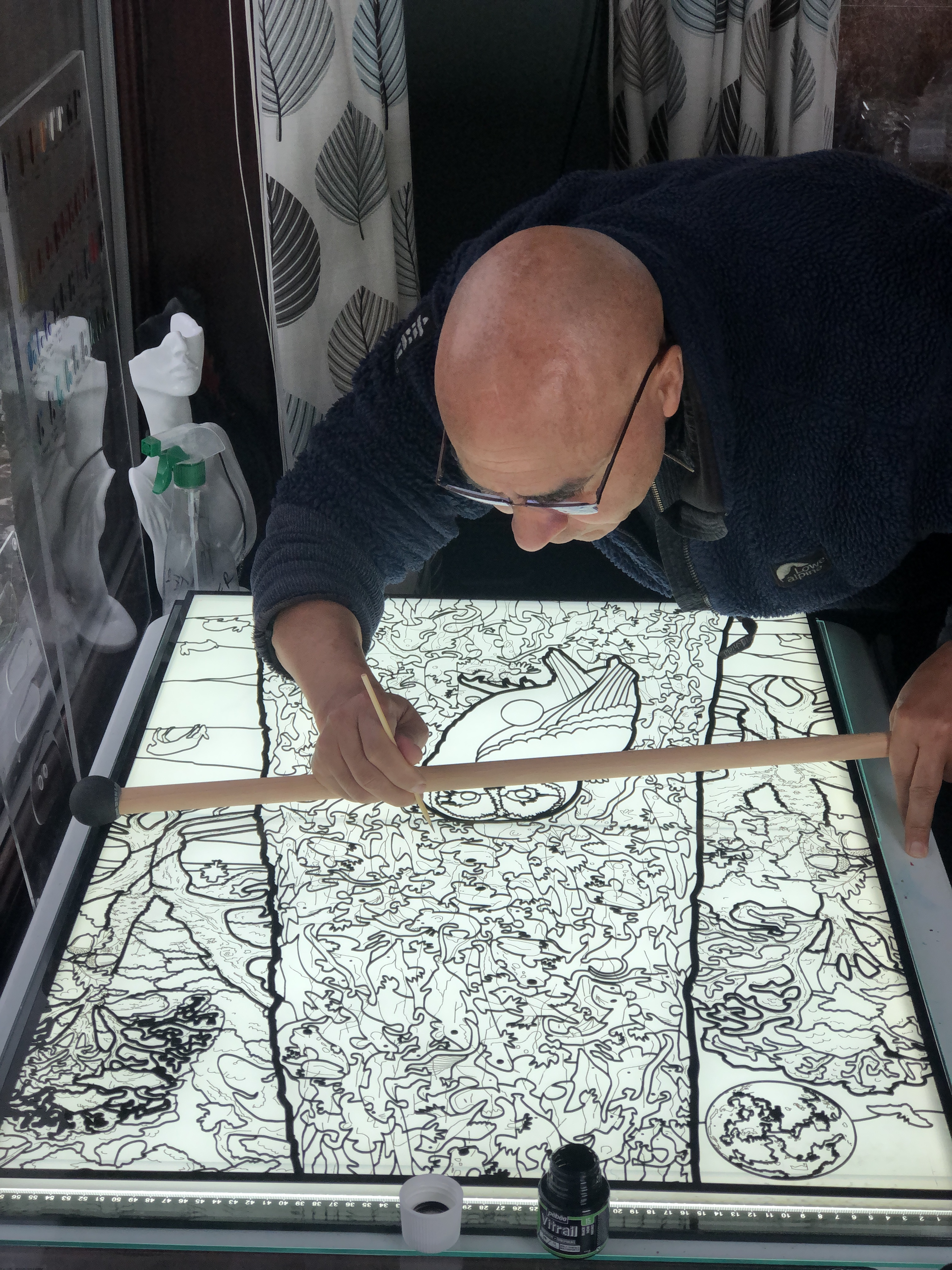
    Michael Autumn drawing and painting black detail lines and spots amid the laser cut black composite plastic faux leading.

    TL;DR

    Not tied to any particular medium or technique, I have tried to devise a way of achieving a stained-glass look with much more detail than is conventionally possible โ€“ using a clear acrylic sheet, laser-cut black composite โ€œleadingโ€ (aka โ€œcamesโ€ โ€“ the โ€œHโ€-shaped strips of lead holding the glass pieces together), and the coloured “glass pieces” are transparent resinous glass paint.

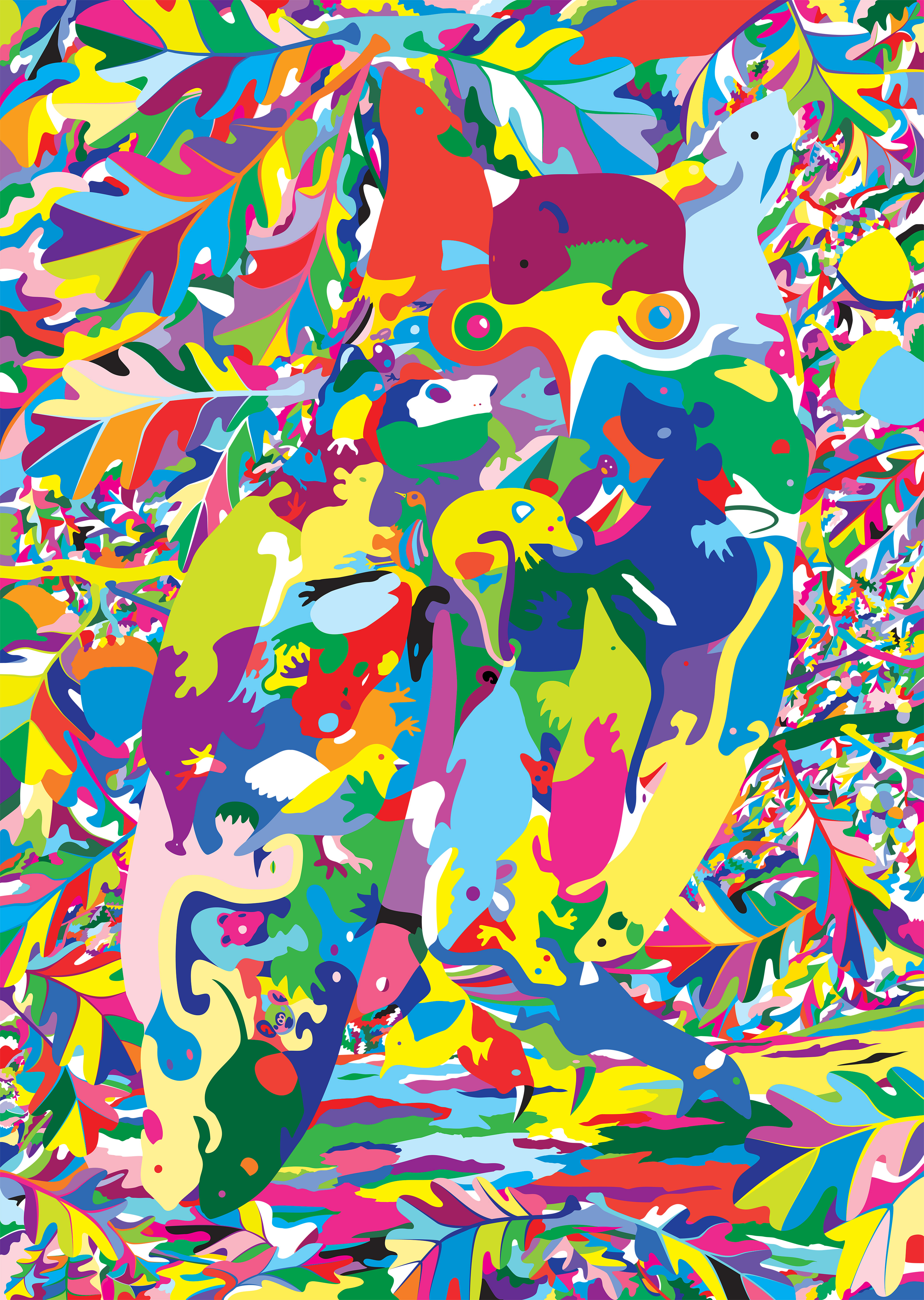
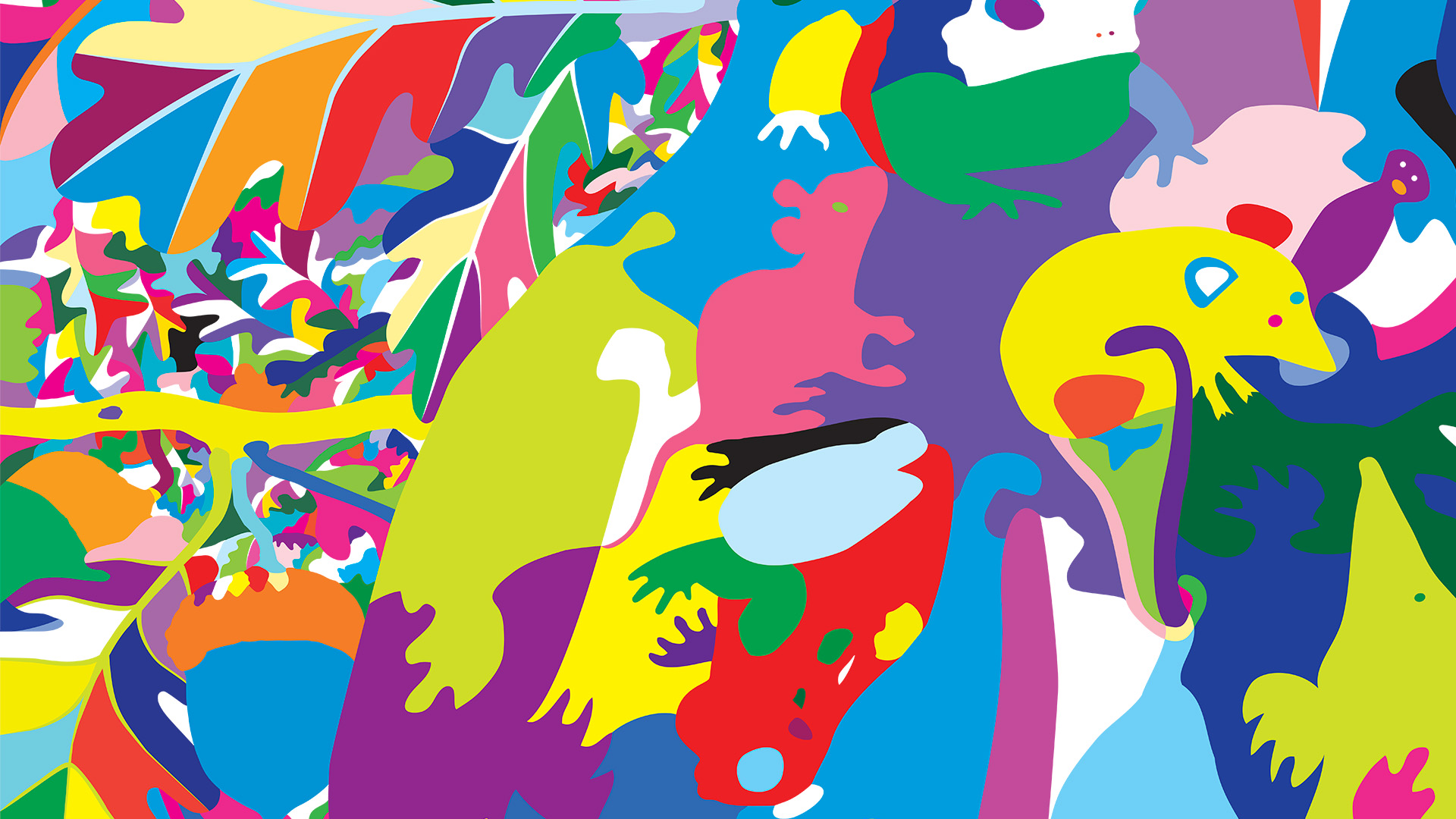
    The scene is a tawny owl in a โ€œtreeโ€, in a landscape with animals, trees, bats, and the moon in the background. The main foreground โ€œtreeโ€ trunk is actually made up of a variety of the owlโ€™s prey creatures โ€“ and asks the question: if these owls eat 2-6 of these animals every day, and they live up to 24 yearsโ€ฆ?


    The centre column (the main tree trunk) of this artwork comes directly from my original thick oak wooden art puzzle (see https://michaelautumn.wordpress.com/2023/05/03/tawny-owl-with-egg-art-puzzle/). That work is naturally quite dark and monochromatic because it is a nocturnal scene, and most of the prey animals (depicted in the main tree trunk) are also nocturnal, and therefore dark and dull coloured. So I thought it would be interesting to turn the idea upside-down and make it into a vibrant kaleidoscopic “stained-glass” landscape scene.
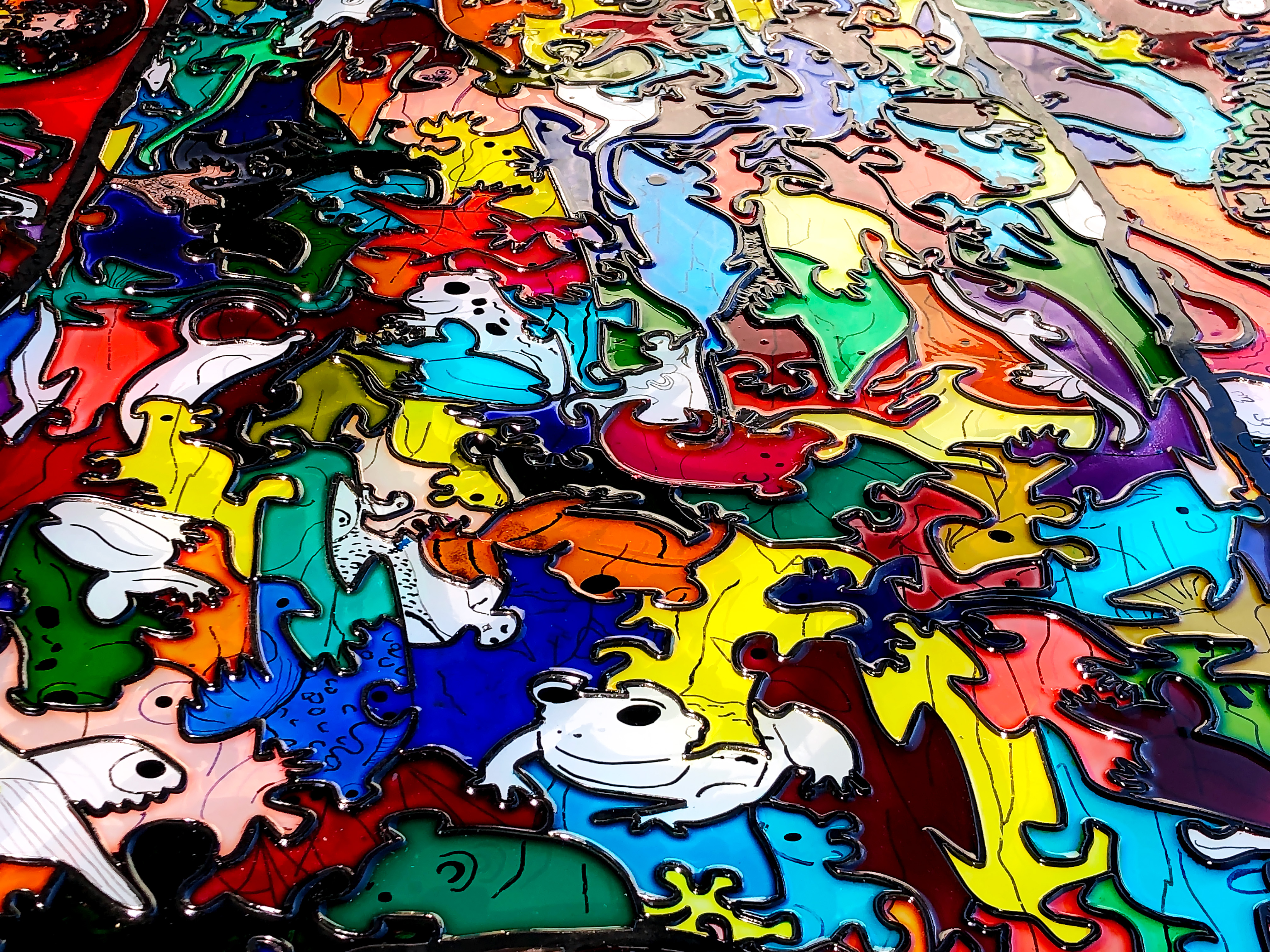
    This imaginary landscape faux stained-glass artwork is my attempt to overcome some of the limitations of conventional stained-glass techniques. Itโ€™s hand drawn and hand painted (using transparent resinous glass paints) on a 10mm thick clear 850mm x 600mm acrylic base. The faux leading (aka โ€œcamesโ€ โ€“ the โ€œHโ€-shaped strips of lead holding the glass pieces together) (of different widths) is my devising: its hand-drawn, laser cut, black composite โ€“ glued to the acrylic base. The coloured glass effect is achieved with transparent resinous glass paint lasgely poured into each cell โ€“ an effect very much like cloisonnรฉ stained-glass.

    Iโ€™m lucky to be a completely free artist – unaffiliated to any art movement, genre, or medium; and not tied to any particular materials, methods or techniques. My main interest is expressing my creativity and achieving my designs to the best of my ability โ€“ using any material/s or techniques I can think of to help me achieve my goals. I like exploring new materials, tools, and technologies: you might call me a tech geek. Iโ€™m very interested in pushing art forward โ€“ as opposed to continuing centuries-old traditions and techniques. In every historical medium I can think of, past masters in those mediums cannot be matched โ€“ let alone surpassed โ€“ and I think itโ€™s pointless to try. All artists can do what they like, but I am keen on creating new things. Iโ€™m very interested in trying new materials and tools that give new and/or greater creative possibilities. While I like the look of stained-glass, I find that the centuries-old tradition of cutting glass and fusing pieces side-by-side with lead โ€“ is too restrictive, time-consuming, and cumbersome. Through my own research and tests I realised itโ€™s possible to create the same look, but more easily and in much greater detail.

    In this artwork I have simulated the opaque dark lead cames look of stained-glass using laser cut black plastic composite. I developed this idea through research and testing, and my design fully exploits the much greater detail possible. My most intricate laser can cut thin material and can readily cut 1mm latticework. The thinnest commercially available lead cames I can find are between 3.5mm and  5mm… The majority of the faux cames in this artword are 1mm, the widest is 8mm. This means not only that far greater detail in the design are achievable, but also more light can come through the windowโ€ฆ

    Lead cames have the function of binding pieces of transparent glass side by side. But I am using coloured transparent resinous glass paint โ€“ so I donโ€™t need to bind pieces of glass together. Cames also have an aesthetic that I like that highlights shapes and colours. I use different widths giving me greater artistic freedom than with conventional cames.

    Finally, the whole piece is covered in a thin layer of clear resin to seal everything and provide extra protection. So the actual stained-glass piece is a thin layer sandwiched between a sheet of clear cast acrylic and a clear resin topcoat. The base, or rear, acrylic sheet also acts as natural UV protection โ€“ filtering out up to 99% UV radiation. And, since this is the side facing the sun/daylight, means it is in the best position to protect the sandwiched coloured layerโ€ฆ

    This is just the beginning of me trying this new techniqueโ€ฆ


  • Long-eared Owl with Oak Foliage (floral map)

    Long-eared Owl with Oak Foliage (floral map)

    (Very low resolution for copyright reasons)

    Title: โ€œLong-eared Owl with Oak Foliage (floral map)โ€
    Artist: Michael Autumn
    Medium: Hand-drawing with digital gouache
    Giclรฉe archival print on fine 100% cotton canvas (matt)
    Hahnemรผhle Art Canvas Smooth 370gsm + Hahnemรผhle UV protection matt varnish
    Size: 36″ (W) x 50.9″ (H), canvas stretcher 38″ (W) x 53″ (H)
    Edition: Limited Edition of 101
    Authenticity: Hand-signed (front, bottom, far right on white canvas border) with graphite pencil (varnished over with same UV-protective matt varnish as whole) and titled (front, bottom, centre on white canvas border)
    Date: 04/2024

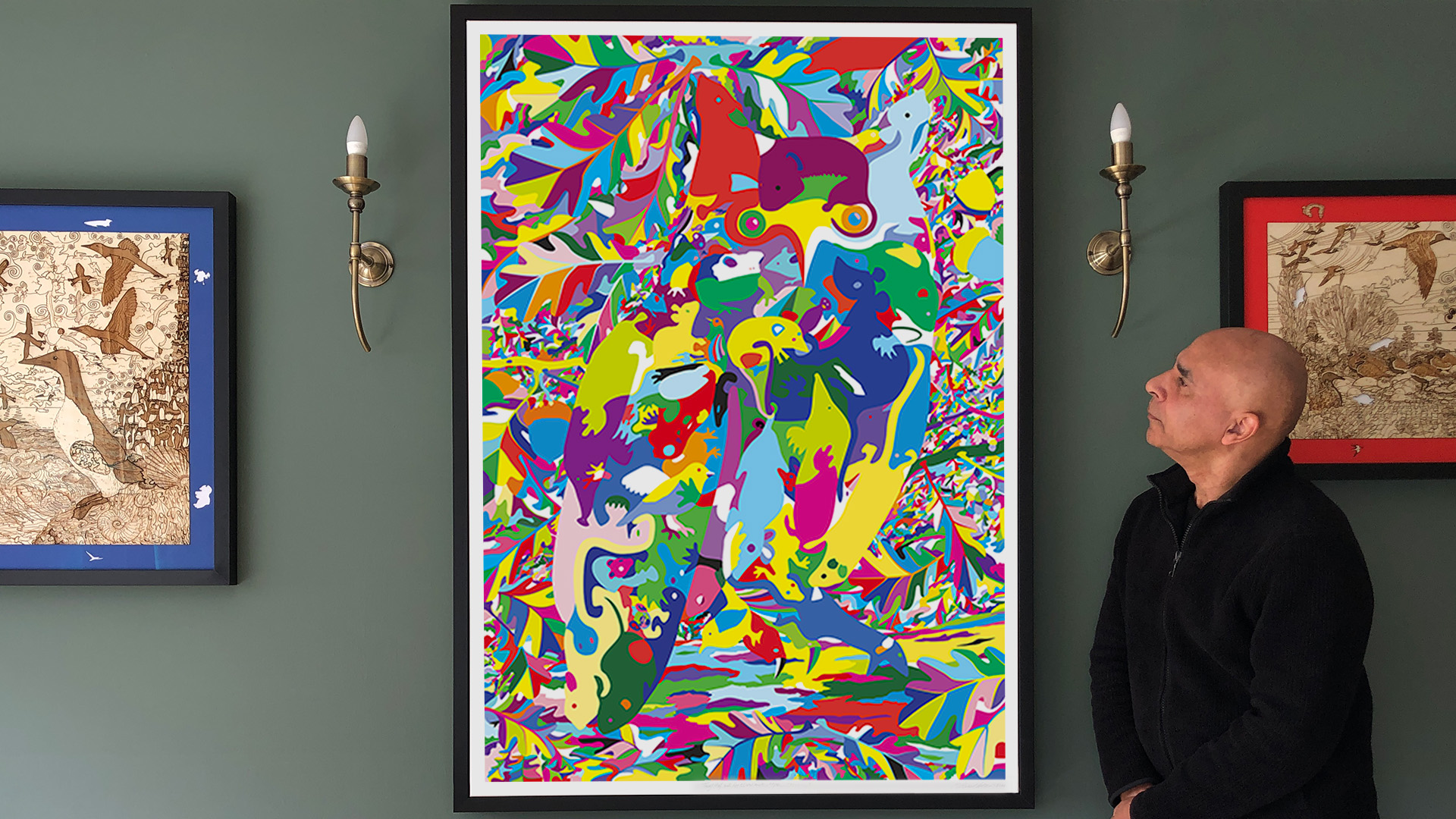
    Just to give an idea of the size the artwork…

    TL;DR

    This artwork is an homage to visual perception โ€“ itโ€™s about how we detect meaning from the millions of individually coloured photons entering our eyes โ€“ and how I, as an artist, can trick you into seeing what I want you to see.

    Owls, like this one, are incredibly well camouflaged – not so much by their colouring, but by their habit of staying completely still, most often in a tree, during their time of rest and sleep (often during the day). So much so, that you could literally walk within feet of them and you probably wouldn’t even realise they are there. Likewise, in this artwork, you have to really look to see the owl…

    And there is a reference to the idiom – “you are what you eat“…

    Long-eared Owl with Oak Foliage (floral map) is the simple colouring-in (albeit very carefully selected and juxtaposed colours) of a flat line drawing I did previously of this art puzzle design (see the photo of that artwork below and this post: Long-eared Owl with Oak Foliage (Art Puzzle)).

    Long-eared Owl with Oak Foliage (Art Puzzle)

    I used this technique to regularly check for line breaks (where there shouldnโ€™t be any), and to get a better view of the shapes of the individual pieces I was designing โ€“ amid a sprawling mesh of simple black thin lines on a white background. This got me to thinking about the difference between the dumb mechanical process of colouring a shape (of a flood fill) and true animal (human) understandingโ€ฆ

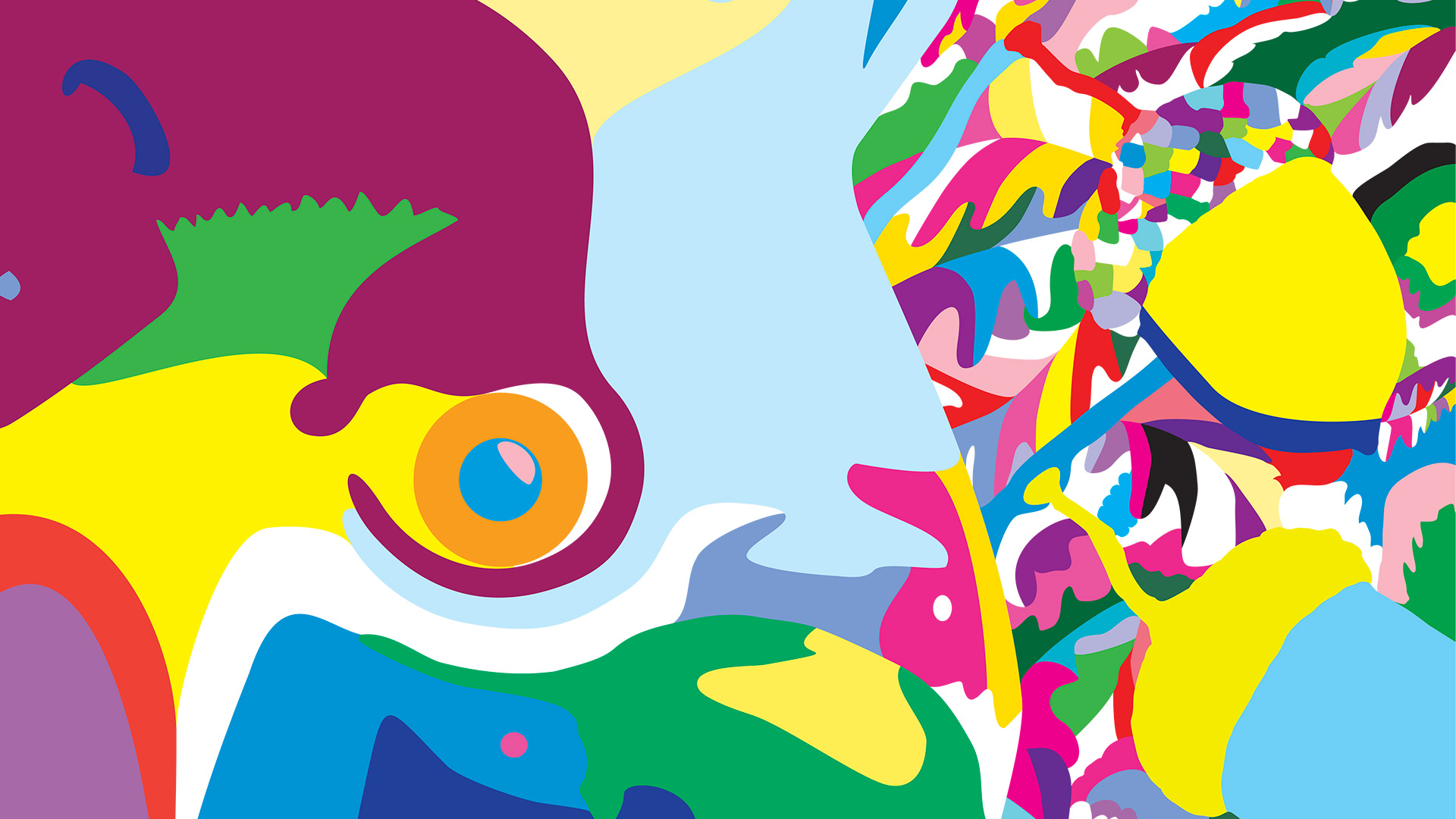
    Detail showing a geographical reference…

    Detail #2

    This is (obviously!) part of my floral map series. See Guillemot with Egg (floral map) for details.

  • Tawny Owl with Egg (floral map)

    Tawny Owl with Egg (floral map)

    (Very low resolution for copyright reasons)

    Title: โ€œTawny Owl with Egg (floral map)โ€
    Artist: Michael Autumn
    Medium: Hand-drawing with digital gouache
    Giclรฉe archival print on fine 100% cotton canvas (matt)
    Hahnemรผhle Art Canvas Smooth 370gsm + Hahnemรผhle UV protection matt varnish
    Size: 36″ (W) x 50.9″ (H), canvas stretcher 38″ (W) x 53″ (H)
    Edition: Limited Edition of 101
    Authenticity: Hand-signed (front, bottom, far right on white canvas border) with graphite pencil (varnished over with same UV-protective matt varnish as whole) and titled (front, bottom, centre on white canvas border)
    Date: 03/2024

    Just to give an idea of the size the artwork…

    TL;DR

    This artwork is an homage to visual perception โ€“ itโ€™s about how we detect meaning from the millions of individually coloured photons entering our eyes โ€“ and how I, as an artist, can trick you into seeing what I want you to see.

    Tawny Owl with Egg (floral map) is the simple colouring-in (albeit very carefully selected and juxtaposed colours) of a flat line drawing I did previously of this art puzzle design (see the photo of that artwork below and this post: Tawny Owl with Egg (Art Puzzle)).

    Tawny Owl with Egg (Art Puzzle)

    I used this technique to regularly check for line breaks (where there shouldnโ€™t be any), and to get a better view of the shapes of the individual pieces I was designing โ€“ amid a sprawling mesh of simple black thin lines on a white background. This got me to thinking about the difference between the dumb mechanical process of colouring a shape (of a flood fill) and true animal (human) understandingโ€ฆ

    Detail showing a geographical reference…

    Detail #2

    This is (obviously!) part of my floral map series. See Guillemot with Egg (floral map) for details.

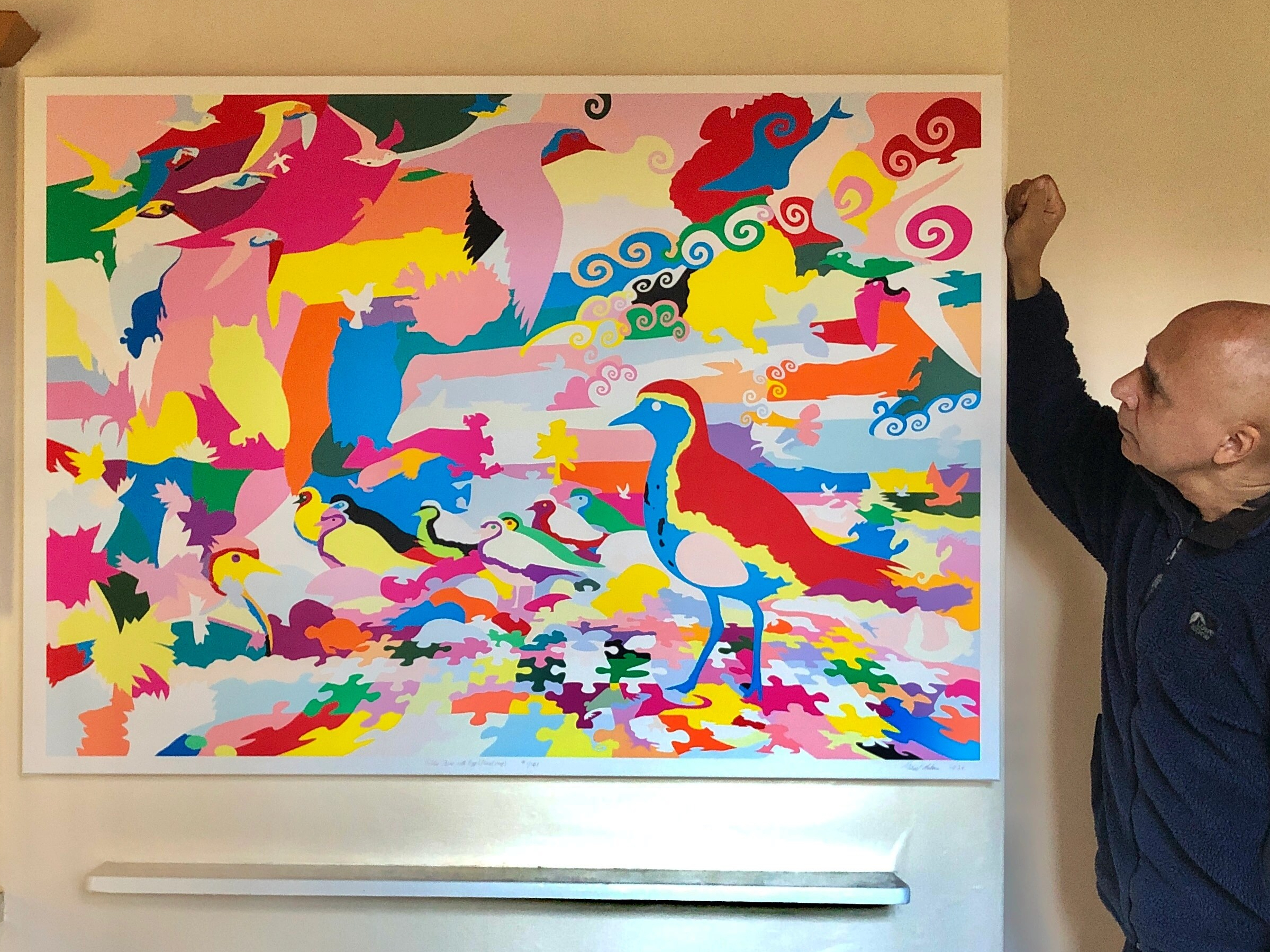
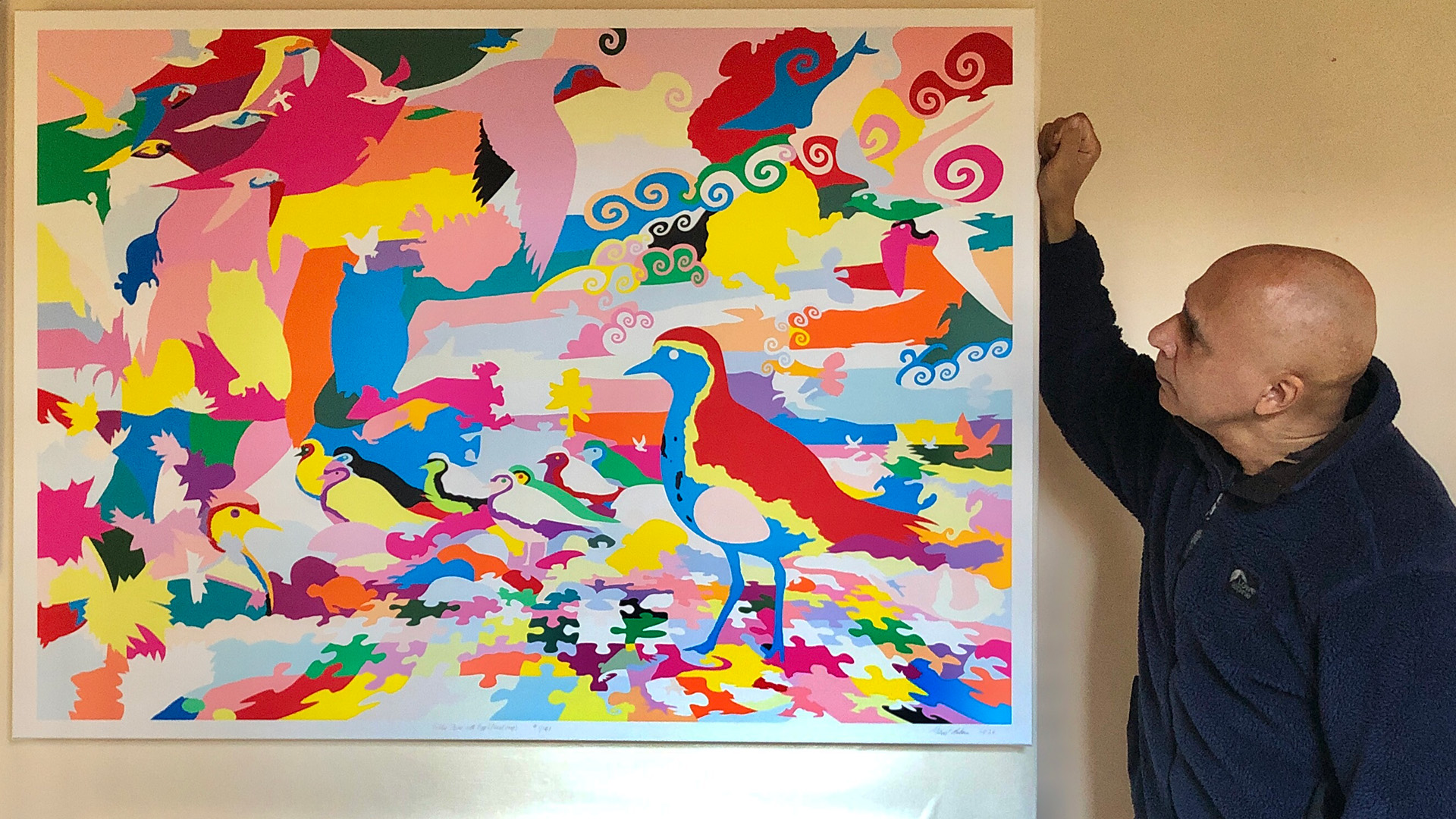
  • Golden Plover with Egg (floral map)

    Golden Plover with Egg (floral map)

    (Very low resolution for copyright reasons)

    Title: โ€œGolden Plover with Egg (floral map)โ€
    Artist: Michael Autumn
    Medium: Hand-drawing with digital gouache
    Giclรฉe archival print on fine 100% cotton canvas (matt)
    Hahnemรผhle Art Canvas Smooth 370gsm + Hahnemรผhle UV protection matt varnish
    Size: 51″ (W) x 36″ (H), stretched canvas 38″ (W) x 53″ (H)
    Edition: Limited Edition of 101
    Authenticity: Hand-signed (front, bottom, far right on white canvas border) with graphite pencil (varnished over with same UV-protective matt varnish as whole) and titled (front, bottom, centre on white canvas border)
    Date: 02/2024

    Just to give an idea of the size the artwork…

    TL:DR

    This artwork is an homage to visual perception โ€“ itโ€™s about how we detect meaning from the millions of individually coloured photons entering our eyes โ€“ and how I, as an artist, can trick you into seeing what I want you to see.

    Golden Plover with Egg (floral map) is the simple colouring-in (albeit very carefully selected and juxtaposed colours) of a flat line drawing I did previously of this art puzzle design (see photo below and this post: Golden Plover with Egg (Art Puzzle)).

    Golden Plover with Egg (Art Puzzle)

    I used this technique to regularly check for line breaks (where there shouldnโ€™t be any), and to get a better view of the shapes of the individual pieces I was designing โ€“ amid a sprawling mesh of simple black thin lines on a white background. This got me to thinking about the difference between the dumb mechanical process of colouring a shape (of a flood fill) and true animal (human) understandingโ€ฆ


    Promo video

    This is part of my floral map series. See Guillemot with Egg (floral map) for details.

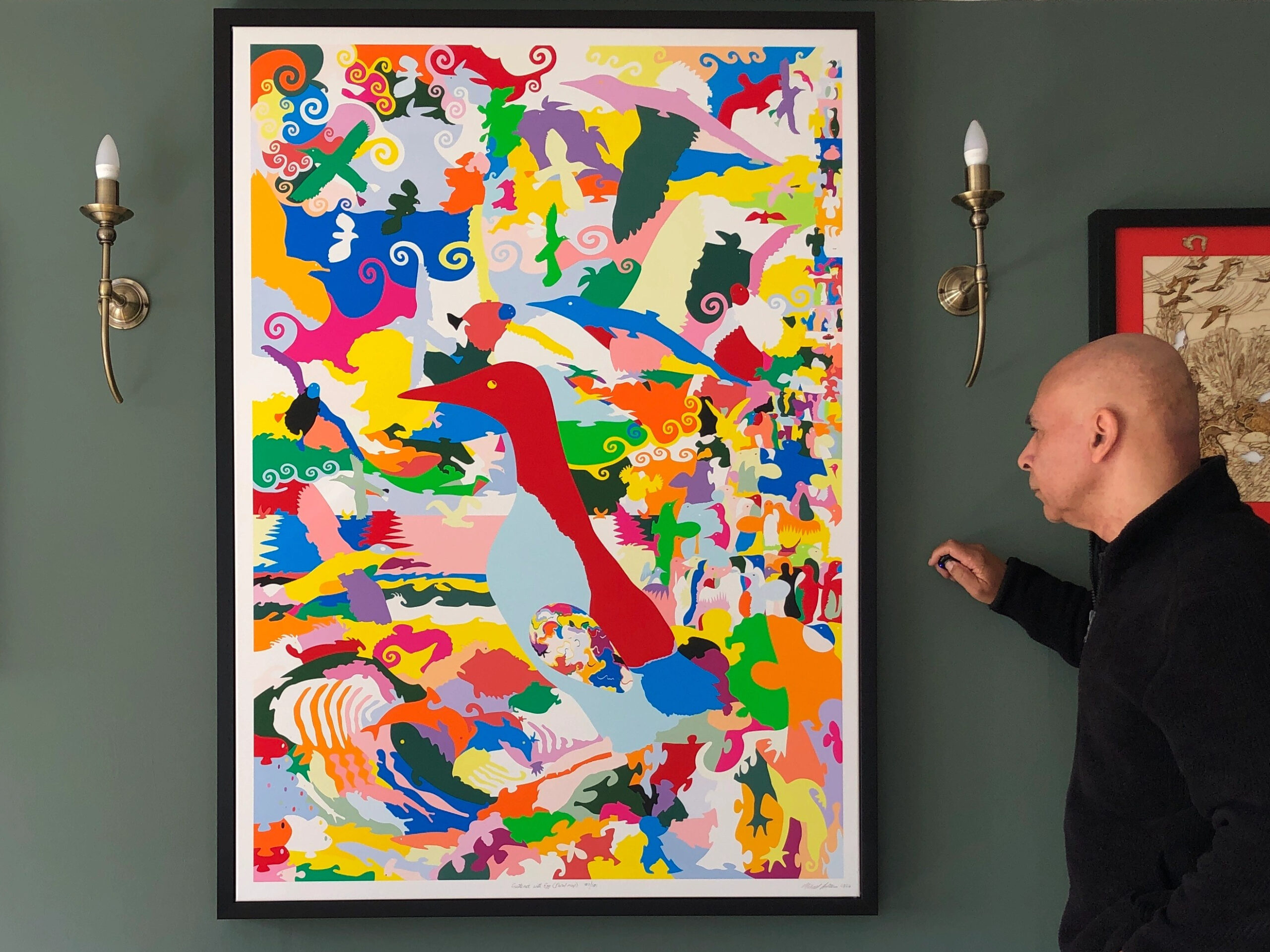
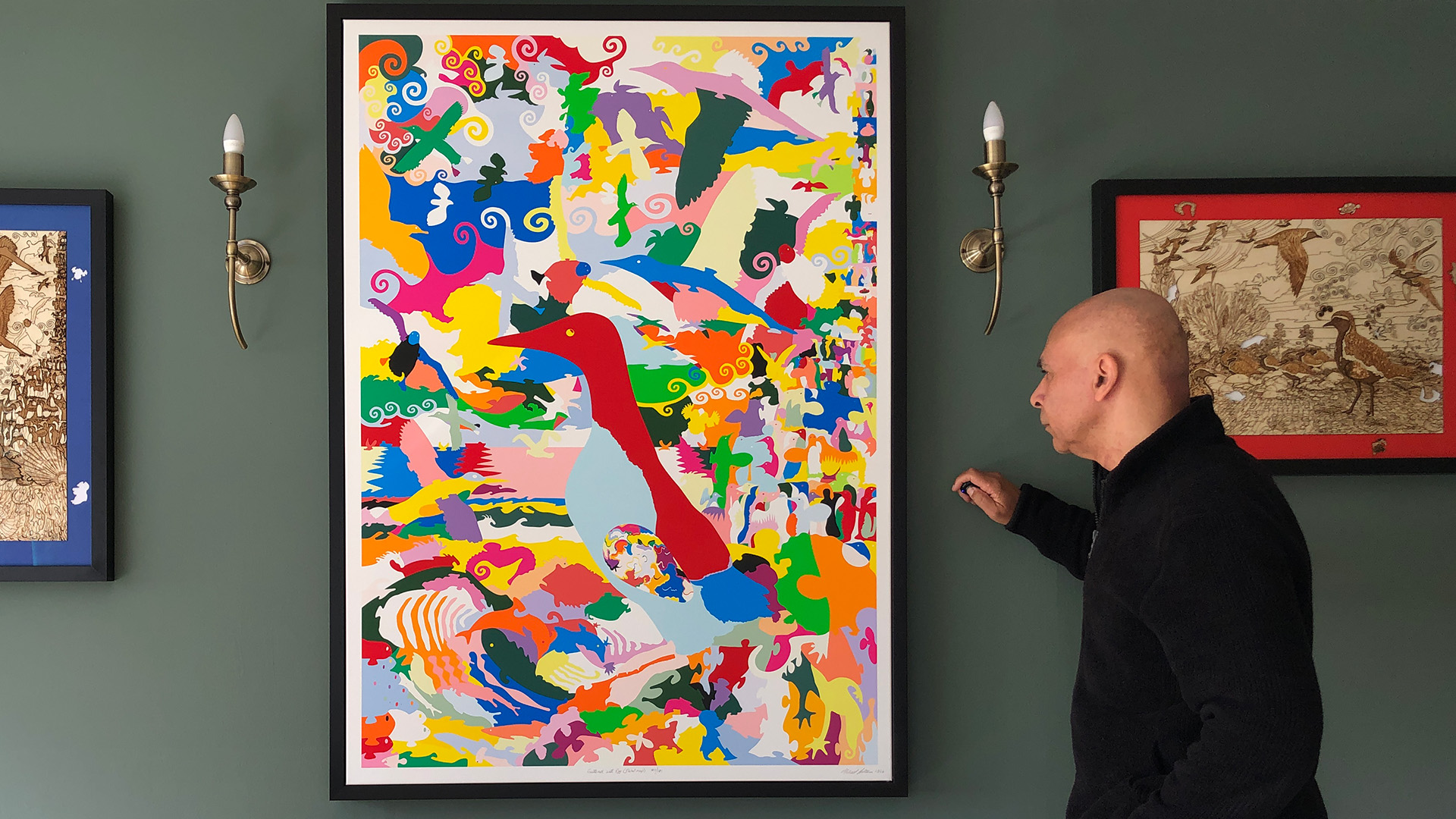
  • Guillemot with Egg (floral map)

    Guillemot with Egg (floral map)

    (Very low resolution for copyright reasons)

    Title: โ€œGuillemot with Egg (floral map)โ€
    Artist: Michael Autumn
    Medium: Hand-drawing with digital gouache
    Giclรฉe archival print on fine 100% cotton canvas (matt)
    Hahnemรผhle Art Canvas Smooth 370gsm + Hahnemรผhle UV protection matt varnish
    Size: 36″ (W) x 50.9″ (H), canvas stretcher 38″ (W) x 53″ (H)
    Edition: Limited Edition of 101
    Authenticity: Hand-signed (front, bottom, far right on white canvas border) with graphite pencil (varnished over with same UV-protective matt varnish as whole) and titled (front, bottom, centre on white canvas border)
    Date: 02/2024

    Just to give an idea of the size the artwork…

    TL;DR

    This artwork is an homage to visual perception โ€“ itโ€™s about how we detect meaning from the millions of individually coloured photons entering our eyes โ€“ and how I, as an artist, can trick you into seeing what I want you to see.

    Guillemot with Egg (floral map) is the simple colouring-in (albeit very carefully selected and juxtaposed colours) of a flat line drawing I did previously of this art puzzle design (see photo of that artwork below and this post: Guillemot with Egg (Art Puzzle)).

    Guillemot with Egg (Art Puzzle)

    I used this technique to regularly check for line breaks (where there shouldnโ€™t be any), and to get a better view of the shapes of the individual pieces I was designing โ€“ amid a sprawling mesh of simple black thin lines on a white background. This got me to thinking about the difference between the dumb mechanical process of colouring a shape (of a flood fill) and true animal (human) understandingโ€ฆ


    The story behind this artwork is part intentional, part serendipity, and partly the indirect fruits of some non-trivial computer programming I did many, many, moons ago…

    I am immensely impressed, and deeply bewildered, by our ability to visually perceive our environment. As you might know, typical adult human beings have about six million cones in our eyes to effectively detect pixels of coloured light (photons) in daylight (rods are used in low-light/dark conditions). Each detected pixel of light is to all intents and purposes completely independent of each other โ€“ and the eyeโ€™s cones are simple colour detectors of light coming into the eye โ€“ not in themselves capable of making any sense of the totality of what the all the other cones are measuring โ€“ they simply pass what they individually detect to the brain (via the optic nerve). It takes one of the most impressive and complex machines in the universe โ€“ a brain โ€“ to interpret these patchworks of colour.

    The brain compares all the pixels together, detects edge boundaries, and uses its vast database of previously classified images (and parts thereof) to try to understand the current image. And by understanding the image I mean recognising the individual objects within it. Without the aid of a vast memory and very sophisticated pattern-recognition, reinforcement, and continuous learning โ€“ making sense of what we see would be impossible โ€“ and we simply wouldnโ€™t survive. Why? Because we wouldnโ€™t be able to find food and water, avoid danger, and move about pursuing our instinctive goals – build and maintain a shelter, avoid various dangers, find a mate, reproduce, etc… That’s not to say that the brain never gets things wrong. In fact, our brainโ€™s insatiable appetite to pattern-match and classify what it โ€œseesโ€ is so strong that it is sometimes fooled into โ€œseeingโ€ things which arenโ€™t thereโ€ฆ Anyone ever seen elephant-shaped clouds…?

    Since about 2021, I have been exploring the physical and metaphorical world of puzzles โ€“ particularly those in Nature: things that are camouflaged, paradoxical, ambiguous, double-entendre, things that are not what they seem. I have been expressing this through the medium of actual visual puzzles โ€“ jigsaw puzzles with a twist, and a completely different purpose โ€“ the purpose of expressing ideas rather than a challenging pastime. I call them art puzzles.

    I start by hand-drawing a full size completely imaginary, but plausible, nature design of a main bird in an appropriate landscape (which takes me a long time – by far the bulk of the total), and then I physically cut out the puzzle (usually in wood). While designing the artwork for these intricate puzzles โ€“ with an eye for structurally interlocking pieces (which are often heavily disguised) โ€“ I periodically check that the cut lines all work โ€“ i.e. that there are no gaps where there shouldnโ€™t be any, and all the pieces cut out cleanly (i.e. not stuck together anywhere).

    This checking is important because, while I cut the pieces by hand for the first three years (and could compensate for any imperfections in the drawings), I have an eye on getting them cut by a computer-controlled machine โ€“ waterjet, laser, or some other technology โ€“ so I have to make the drawings โ€œperfectโ€. As many of you will know, if you provide instructions to humans, you can get away with some imperfections and inaccuracies because an intelligent human being is likely to still achieve the correct result โ€“ compensating for your mistakes and imperfect measurements/instructions โ€“ because they can guess at your intentions. But most of you will also know that you canโ€™t get away with anything when a computerised mechanical machine does the work: it will do exactly what it is told โ€“ no more, no less โ€“ because it has no notion of what it is supposed to do.

    Zooming in on a complex detailed drawing and looking for gaps of where lines donโ€™t join where they should – is a very tedious, long-winded, task โ€“ and itโ€™s difficult to be certain youโ€™ve properly checked everywhere. So a while back I got the idea of flood-filling the areas to see if there are any leaks. For those of you not familiar with the term, flood-filling is an automated way of filling an area of colour – of any complexity – with a new colour. It is not filling the whole image with colour โ€“ that isnโ€™t much use. It fills/puts the new colour everywhere that is the same colour as the original point (pixel) colour โ€“ and here is the subtle bit โ€“ the colour has to be connected to the original point. To illustrate this, here is a sequence of pictures showing a small detail of my gap-finding process :-

    Detail of the drawing with no gaps

    Detail of the drawing with a small gap – can you see it…?

    Detail of the drawing with red arrow showing a small gap

    Detail of the drawing with flood fill going through the gap

    Detail of the drawing with flood fill confirming gap fixed

    Detail of the drawing with various flood fills showing good gap integrity


    So where does the computer programming part come in – that I mentioned in the introduction? Well, many, many, moons ago – when personal computers were just emerging, I started a career which involved creatively using IT to help people with special needs โ€“ recreation, communication, education, etc… One of the most rewarding projects I took on was to design an art program that would enable people who could reliably press one, two, or three buttons with any part of their body – to draw and paint on the computer – and print out their colourful creations. (I was an artist long before I got involved in computing, and so this was particularly interesting to me.) My main customer and inspiration for the program at the time was a very talented mouth-artist, called Mary, whom I was very ambitious for. I wanted to provide for every feature she asked for – in addition to those I thought should be there. One day while doing quite a complex design with the program, Mary asked if it was possible to change the colour of part of her picture. It wasnโ€™t at the time, but I set about designing the feature. To my knowledge it hadnโ€™t been done before, and it turned out to be quite challenging (it took me about a month to crack it). These days it’s common in art programs, and is something most people take for granted. But solving the problem from scratch was very satisfying and gave me insights to its many possibilities (including solving any 2D line-drawn maze of any complexity)โ€ฆ

    The serendipitous aspect of this artwork lies in when I realised that the various flood fill tests I was doing during the course of designing the original art puzzle – were actually quite appealing in their own right. While I was only using a few simple random colours for my tests, I thought that with a harmoniously selected floral colour pallet and careful colour juxtapositions, I could make a really attractive design… I parked the idea at the time because I was engrossed with my original intention, but I did come back to it this year. It took quite a long time to arrive at the final design, and printing the colours correctly (i.e. as I envisioned and designed them on my computer) was really tricky (as usual!). Printed on the best available printer with the most archival inks. Best UV protection matt varnish.

    I really like it, and itโ€™s like nothing Iโ€™ve seen beforeโ€ฆ